The momentum that had driven sustainability forward in recent years was reframed in 2025 around resilience and business value. Economic pressure, geopolitical uncertainty and evolving regulation prompted many organisations to reassess priorities and concentrate on what is required now. At the same time, expectations around credibility, data quality and accountability sharpened.
Across thinkstep-anz, we are seeing a clear pattern. Sustainability work has not stopped, but it is becoming more focused, more evidence-based and more closely tied to business value. Looking ahead to 2026, the question is not whether to act, but how to act well. That means focusing on what matters most, using the right tools and expertise, and communicating clearly and confidently.
We asked our team what they are predicting for 2026 and their focus is when it comes to progressing sustainability.
Use sustainability to shape direction, not simply to manage exposure
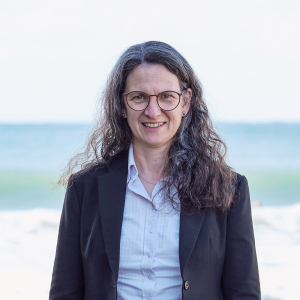
Barbara Nebel, CEO of thinkstep-anz" sees sustainability shifting from a compliance obligation to a strategic capability at board level.
"
By 2026, the most important shift is not regulatory, it is cultural. Sustainability is becoming a strategic capability rather than a compliance exercise. Boards that embed it into decision-making will lead, the rest will follow.
Sustainability will become one of the most important leadership topics in the boardroom. By 2026, compliance and liability management will be expected as a baseline. The real question will be whether boards are using sustainability to inform strategy, guide investment decisions, and strengthen long-term business value.
For many organisations, sustainability has understandably started as a risk conversation. That focus remains important, but it is no longer enough. Sustainability data is now becoming decision-grade. When boards understand emissions, resource use, product impacts, and circularity in the same way they understand financial performance, they gain a powerful lens on risk, resilience, and opportunity.
This shift requires sustainability to be embedded, not delegated. Boards need to engage with the quality of data, understand trade-offs, and ensure sustainability is integrated into strategy, capital allocation, and performance discussions. When sustainability sits alongside the business, it stays peripheral. When it sits within decision-making, it creates value.
My recommendation to boards is to move beyond compliance thinking. Treat sustainability as a strategic lens rather than a reporting task. The organisations that lead in 2026 will be those whose boards use sustainability to shape direction, not simply to manage exposure."

Proof will matter more than promises

Nicole Sullivan, Impact Director, expects the next two years to fundamentally change how sustainability claims are judged.
"I see a decisive shift away from intent and towards proof. As 2030 targets move closer, stakeholders are no longer satisfied with ambition alone. They want clear baselines, credible data, and evidence that plans are actually being delivered.
Fast, simplified calculators will continue to grow in popularity, but they will not replace the need for robust, verified data such as EPDs where genuine decarbonisation is the goal.
Product-level transparency, robust carbon footprints, Environmental Product Declarations, and traceable methodologies are becoming non-negotiable. Claims based on assumptions or generic data are already being challenged more frequently and more publicly.
My recommendation is to build credibility early. Invest in robust data foundations and transparent methods, even if progress feels incremental. There is no pause button on sustainability. Small, practical steps grounded in credible evidence still move organisations forward."
Building momentum through better measurement

Jeff Vickers, Technical Director, sees measurement shifting from a technical exercise to a strategic capability.
"Measurement is becoming faster and more accessible thanks to better tools, AI-supported analysis, and more available datasets. Spend-based emission factors, in particular, are now widely used to establish early baselines and identify hotspots across large and complex organisations.
The real challenge is focus. I see many organisations at risk of collecting more data than they can meaningfully use. We need to focus our efforts on measuring what matters most so that we don't get lost in the detail.
The organisations that make progress will be those that identify what truly matters and use measurement to inform decisions, not just populate reports.
My recommendation is to measure what matters most. Be clear on materiality, apply consistent methodologies, and use data to drive action. You cannot manage what you do not measure, but measuring without purpose will not deliver change. Measurement should create clarity, not false confidence."
Sustainability will move into the core of the business

Martin Fryer, Head of Strategy and Disclosures, sees sustainability becoming inseparable from how organisations manage risk and value.
"I expect sustainability to be firmly embedded in governance, financial planning, and risk management. It will no longer sit alongside the business as a separate workstream. Instead, it will increasingly shape how organisations understand value, manage risk, and make decisions.
As 2030 targets draw closer, stakeholders will demand clearer evidence of progress. The focus will shift away from intent and ambition and towards outcomes, trade-offs, and transparent performance over time. Organisations that move ahead will be those that can clearly link sustainability action to business value, particularly when resources are constrained and priorities are competing.
Sustainability will influence everyday decisions across the organisation, from investment and procurement to workforce planning and operational performance. When it is integrated well, it strengthens governance, improves performance reporting, and supports long-term resilience.
My recommendation is threefold. First, continue embedding sustainability into business culture so it becomes “the way we do things around here”, not an added task. Second, integrate sustainability into risk and financial systems, as this is where it becomes durable and defensible. Third, recognise and celebrate progress wherever it occurs, from reduced emissions and improved safety outcomes to internal capability building. It all counts.
The biggest risk I see is losing momentum. Letting sustainability slide, even briefly, is a false economy. To stay ahead, organisations should focus on what is most material, collaborate with like-minded partners, and remember that people are the most important asset. Engage them, involve them, and celebrate progress with them."
Starting small will be smart, standing still will not
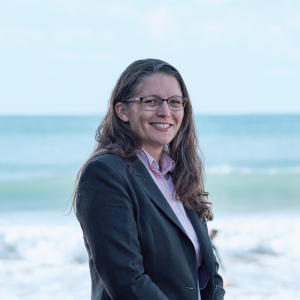
Emily Townsend, Services Director, sees pragmatic, phased approaches becoming the norm.
"Economic pressure, regulatory uncertainty, and smaller internal teams are shaping how organisations approach sustainability. I see many organisations starting with pilots and targeted projects rather than large-scale programmes. This is a rational response to complexity, not a lack of ambition. Tools and platforms can support efficiency, but their limitations become clear especially around materiality, stakeholder engagement and strategic interpretation.
Starting small is fine, but starting is essential. Even where regulation softens, sustainability work remains a critical way to future-proof organisations financially, environmentally and socially. Use tools to support efficiency, but do not mistake automation for insight. The greatest value still comes from credible data, expert interpretation and clear strategy aligned with what matters most to the business."
Product transparency will decide who gets access to markets

Sean O’Flaherty, Head of Client Engagement, sees product transparency becoming a commercial gatekeeper.
"AI, fast calculators, and generic datasets can help screen options and identify early opportunities. However, they are not sufficient where genuine decarbonisation, procurement decisions, or market access are involved. Product transparency, supported by credible data, is becoming a baseline expectation rather than a differentiator.
Sustainability leaders will continue to push forward regardless of political shifts, recognising that long-term value creation outweighs short-term noise. The focus is increasingly on outcomes that deliver both financial and non-financial returns.
My recommendation is to focus on evidence-based decision-making and to progress sustainability opportunities early, particularly during the design phase where the greatest impact can be achieved. Product transparency is no longer just a sustainability issue. It is a commercial one. "
Circular economy will demand the same rigour as carbon

Jim Goddin, Head of Circular Economy, sees circularity moving from narrative to evidence.
"In 2026, circularity will be expected to be measured and reported with the same rigour as carbon. Circular economy principles will move well beyond recycling, with organisations needing to demonstrate how materials retain value over time using credible, traceable data. Demand for verified circularity metrics, including the Material Circularity Indicator (MCI), will increase as they are embedded in tools such as Green Star and BREEAM and linked to procurement decisions.
Circularity metrics are increasingly shaping procurement frameworks and market access requirements. This shift will be reinforced by international developments such as the European Ecodesign for Sustainable Products Regulation (ESPR) and digital product passports. Access to markets will depend less on narrative and more on credible circularity data.
At the same time, circularity will be recognised as a practical business strategy. It can help manage supply risk, strengthen local supply chains, and improve long-term resilience, particularly in resource-constrained environments.
My recommendation is to treat circularity with the same discipline as carbon. Focus on durable design, supply chain transparency, and credible metrics. Circular procurement is no longer aspirational."
Communication will become a risk management tool
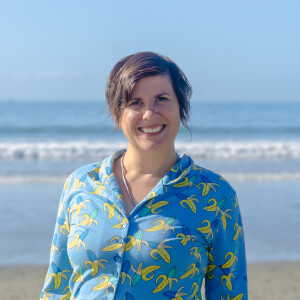
Jule Scherer, Head of Communications, sees rising risk in unclear sustainability messaging.
"Sustainability communication is under unprecedented scrutiny. I see regulators and consumer groups actively testing claims, with a clear expectation that organisations can prove what they say. Vague language and sustainability jargon increase risk rather than reduce it.
My recommendation is to communicate clearly and honestly, using plain English. Explain what you are doing, why it matters, and where work is still underway. Clear, honest communication builds trust, reduces risk and, just as importantly, makes your story engaging and worth reading."
Technology will accelerate progress, not replace judgement

Noa Meron, Head of Data and Digital Solutions, sees technology reshaping how sustainability decisions are made.
"Digital tools and advanced analytics are accelerating sustainability work. I see life cycle assessments becoming faster and more accessible, with greater use of scenario modelling to inform early design decisions. However, speed without governance creates risk. AI outputs are only as good as the data, assumptions, and oversight behind them.
My recommendation is to use technology to improve efficiency and accessibility, while maintaining strong human oversight. Understanding the limits of tools and checking outputs carefully remains essential."
Being unprepared will be the biggest climate risk

Katharina Bauch, Head of Carbon, sees delay as the greatest risk facing organisations.
"Regulatory momentum around greenhouse gas reporting is building. I see the biggest risk not in imperfect data, but in being unprepared when requirements take effect.
Tools and AI will play a larger role in GHG reporting and strategy, but their limitations will become more apparent. Understanding what tools can and cannot do, and checking outputs carefully, will be essential.
Spend-based emission factors will continue to play a critical role in early inventories, particularly where detailed activity data is not yet available.
My recommendation is to start with the data you already have, use existing financial, procurement of distribution data to build an initial picture, and progressively improve data quality where it matters most. Starting imperfectly is far safer than waiting."
Communication will determine whether sustainability work delivers impact
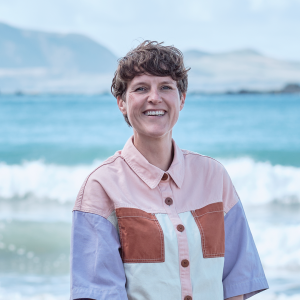
Caroline Noordijk, Head of Creative, sees communication as a critical enabler of sustainability impact, particularly as organisations navigate economic pressure and evolving regulation.
"Over the past year, many organisations have taken a more cautious approach, reassessing what is essential and, in some cases, delaying action. However, those that stayed the course or invested through uncertainty are now better positioned to create value beyond compliance.
I see strong parallels with marketing: organisations that continue to invest thoughtfully during downturns tend to emerge stronger. Looking ahead to 2026, she expects similar pressures to persist, with a real risk that organisations turn to cheap, low-quality solutions that fail to deliver credibility or assurance.
My recommendation is to focus on building robust sustainability strategies and using them to guide investment, connecting different strands of sustainability work to create meaningful impact. Across all of this, communication remains critical. You can do excellent technical work, but if it does not reach the right people, it risks stopping at “good” when it could have been “great.”"