Cookie in use
By using our site, you acknowledge that you have read and understood our Cookie Policy, Privacy Policy, and our Terms & Conditions.

Accelerate your scope 3 emissions reporting with updated, locally relevant data.
Our annually updated Emission Factors for New Zealand help you estimate scope 3 emissions using financial data already in your accounting systems.
These factors provide emissions per dollar spent, making them ideal for screening, developing a baseline, or tracking your emissions year-on-year.

Free
Click here to download the Pdf, Excel file, and original consulting paper

From NZ$2900 excl. GST
Note: The year references the national economic/emissions data upon which the emission factors are based. Our releases are always based on the latest data available and scaled for inflation for your reporting year.
Click here to order your licence:
If you’re not sure what you need, get in touch and we can guide you.


While scope 1 (direct) emissions and scope 2 emissions (indirect, from the energy used) are relatively tangible, scope 3 emissions (from your value chain) are different. Determining the emissions of a product or service without detailed data can be difficult and time-consuming. Emission factors (per dollar spent) use financial data that is usually already available. They are an easy way to get started with carbon footprinting.
These emission factors are suitable for:
| Spend-based EFs are great for | Spend-based EFs are not ideal for |
|---|---|
|
|
|
|
|
|
|
|
 |
 |
 |
In addition to the aggregated emission factors provided in the free version, the commercial licence:
Emission factors are split by scopes (scope 1, 2 and 3) to allow businesses to calculate the emissions they need.
EXAMPLE: Financial institutions applying the PCAF Global GHG Accounting and Reporting Standard (e.g., in climate-related disclosures via XRB or TCFD) must disclose the scope 1 and scope 2 emissions from loans and investments. The commercial licence to Emission Factors for New Zealand splits emission factors into scope 1, scope 2 and scope 3. These emissions are supplied both per dollar (PCAF data quality score of 4) and per sector (PCAF data quality score of 5). Providing sector-level data means financial institutions such as banks can allow the outstanding amount of a loan to be used without knowing total equity and debt.
Emission factors are split by greenhouse gas. We report all seven GHG categories covered by the Paris Agreement and GHG Protocol (CO₂, CH₄, N₂O, HFCs, PFCs, SF₆ and NF₃).
EXAMPLE: Disaggregation of scope 3 data by greenhouse gas is optional within the GHG Protocol and ISO 14064-1:2018. However, it is a useful way to help your business understand which GHGs you are most exposed to in your supply chain.
Emission factors are split by emissions generated within New Zealand versus those imported into New Zealand.
EXAMPLE: You have a research project where you wish to separate domestic and imported emissions because only domestic emissions can be compared against New Zealand’s total emissions reported under the Paris Agreement / United Nations Framework Convention on Climate Change (UNFCCC).

We calculated the emission factors, or emission intensities, using Input-Output Life Cycle Assessment (IO-LCA) at the national level. The method, also called Environmentally Extended Input-Output (EEIO) assessment, calculates the greenhouse gas emissions from many activities in our economy. For our calculations, we used Stats NZ’s greenhouse gas emissions statistics for domestic emissions and the Eora Global Supply Chain Database for imported emissions.
The Ministry for the Environment publishes annual New Zealand-specific emission factors expressed in physical units (e.g. kilowatt hours). While physical units are great for keeping track of energy-related activities, such as electricity, they are harder to apply for purchased goods and services. In these cases, it is often easier to use emission factors per dollar spent.
Spend-based emission factors aren’t as precise as activity-based emission factors, but they are ideal for a first assessment to understand an organisation’s emissions hotspots.
Emissions factors for both wholesale and retail transactions

One business buys fish for $20,000 excl. GST directly from a seafood processor
A consumer buys $20 incl. GST of fish from a retail store
This includes the retail logistics emissions, retailer margins, and GST

This licence is for companies that wish to use the emission factors to calculate their own scope 3 emissions and/or financed emissions. It can also be used by researchers who require disaggregated emissions data. It can be built into a commercial carbon/sustainability software tool for use by a single company calculating its own indirect emissions. A company-wide licence is NZ$2,900 excl. GST per year and you can cancel at any time.

This licence is for software developers who wish to make the emission factors available directly to their customers without paying a fee per customer. Please contact us to find out more.

This licence is for tool developers who wish to resell the emission factors directly within their software tool. Please contact us to find out more.
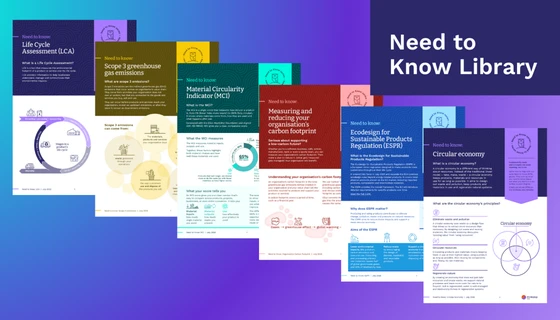
These short, easy-to-understand guides contain everything you need to know about a variety of sustainability topics, written in plain English.
Learn what’s new in our latest version including an improved approach for commodity factors, updated figures and a revised methodology report.
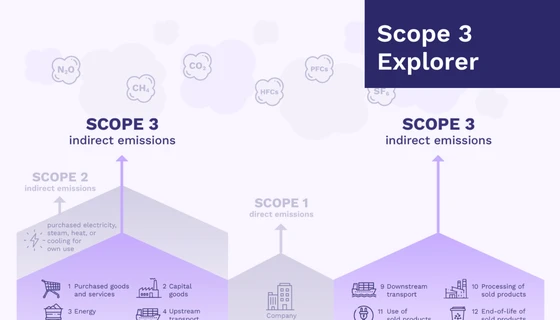
If you’re wondering how to tackle your Scope 3 emissions, we can help you identify the emissions that are most relevant to your business.