Watch the webinar replay here, or scroll down for a summary and a preview.
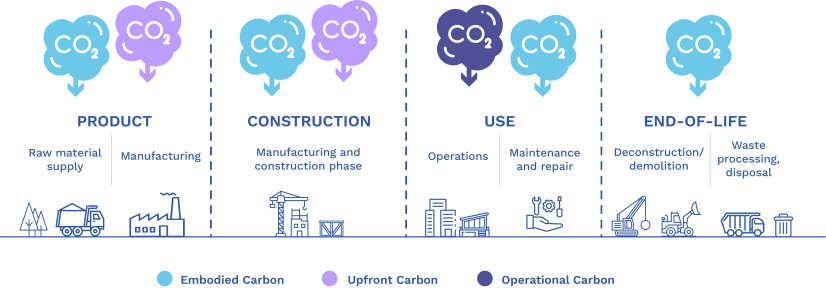
We must urgently reduce carbon emissions from the built environment to meet our climate goals. This includes operational and embodied carbon. While we know that we can cut down on carbon emissions from operating buildings by making them more energy-efficient and decarbonising the electricity grid, there is a lot more work ahead to rein in embodied carbon.
NABERS (National Australian Built Environment Rating System) and the Green Building Councils on both sides of the Tasman (NZGBC in New Zealand and GBCA in Australia) have been working together to make measuring and benchmarking embodied carbon more consistent.
Join James Elks (NABERS’ Head of Product Development) and Sam Archer (NZGBC’s Director of Market Transformation) as they talk with our Technical Director Jeff Vickers to update where the industry is at and what to expect in 2024.
Here's a preview of our webinar
The webinar covered:
- What embodied carbon is and why it matters
- Why we need action on embodied carbon now
- How to measure embodied carbon
- The role of rating systems in cutting down embodied carbon
In the webinar we learned:
Embodied carbon emissions are associated with constructing and maintaining an asset, as well as treating waste at the end of the asset’s life. They account for approximately 5 to 10% of annual emissions in Australia and New Zealand.
Embodied carbon is ‘locked in’ early through decisions made when assets are planned, designed, procured, delivered and maintained. This is why we need to act now to reduce it.
This is planned for 2024:
- NABERS has been working on an Embodied Carbon rating tool to complement its existing building rating tools. This tool will be piloted throughout the year and then launched to the wider market.
- NZGBC has free embodied carbon calculators available for residential buildings (under Homestar) and non-residential buildings (under Green Star). The Green Star Embodied Carbon Calculator will roll over into Green Star Buildings NZ, the latest version of Green Star which is scheduled to replace Green Star Design & As Built in mid-2024.
2007
ISO 21930: International standard for EPDs (Environmental Product Declarations) of building products (now revised as ISO 21930:2017): Read it here
2011
EN 15978: European standard for building LCA (Life Cycle Assessment) (currently being revised): Read it here
and the preliminary revised standard (still in the approval process): Read it here
2012
EN 15804: European standard for EPDs of building products (now revised as EN 15804:2012+A2:2019): Read it here
2016
BRANZ (Building Research Association of New Zealand) carbon calculators, data and building LCA framework: Read it here
2018
thinkstep-anz report “The carbon footprint of NZ's built environment: Hotspot or not?”: Read it here
2019
World Green Building Council “Bringing embodied carbon upfront”: Read it here
2020
MBIE (New Zealand Ministry of Business, Innovation & Employment) Building for Climate Change (BfCC): Read it here
and its 2020 consultation papers: Read it here
and a summary of feedback: Read it here
GBCA (Green Building Council of Australia) Green Star Buildings: Read it here
2021
GBCA & thinkstep-anz “Embodied Carbon & Embodied Energy in Australia’s Buildings”: GBCA and thinkstep release Embodied carbon report and Embodied carbon embodied energy in Australias buildings
CEFC (Clean Energy Finance Corporation) “Opportunities for cutting embodied carbon”: Read it here
Low Carbon Living CRC, Low Carbon Institute & UNSW “Race to Net Zero Carbon”: Read it here
NZGBC (New Zealand Green Building Council) Homestar Embodied Carbon Calculator (for residential buildings in New Zealand):
2022
NABERS (National Australian Building Environment Rating System) Embodied Carbon consultation
NSW Sustainable Buildings State Environmental Planning Policy (SEPP): Read it here
2023
NZGBC Green Star Embodied Carbon Calculator (+ methodology + calculator guide) (scroll down to “Technical resources” then “Calculators and calculator guides” then Credit 19): Read it here