thinkstep-anz is excited to celebrate the launch of the NABERS Embodied Carbon rating tool.
NABERS, or the National Australian Built Environment Rating System, is a sustainability rating system that measures the environmental performance of buildings. This tool will enable new buildings and partial rebuilds to measure, verify, and compare their upfront embodied carbon emissions with similar buildings. For the first time, Australia has a consistent, industry-agreed method to address embodied carbon emissions, helping achieve the 2050 net zero target.
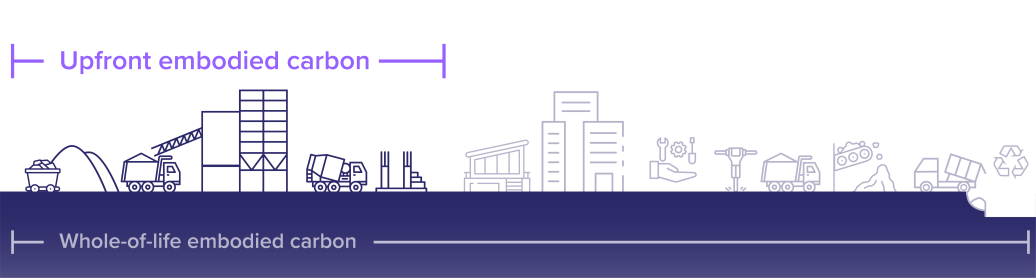
Upon a building’s completion, it will be eligible for a NABERS Embodied Carbon certificate. The certificate will provide a clear, concise evaluation of a building’s greenhouse gas emissions impact and promote transparency across the industry.
“The NABERS Embodied Carbon tool, the first of its kind in Australia, provides an industry-consulted and agreed method to measure and report on upfront embodied carbon emissions in buildings,” Nicole Sullivan, Impact Director at thinkstep-anz says.
“This tool is the culmination of around three years’ work by NABERS and its partners to create a solution tailored to the Australian construction industry while maintaining alignment with international standards and methods,” Nicole adds. “It will help Australia measure and track our progress towards net zero carbon in the built environment.”
thinkstep-anz has been NABERS' technical partner for this project since early 2022, providing our expertise in embodied carbon life cycle assessment (LCA) and industry consultation. We assisted NABERS in developing the technical rules for the tool, alongside the calculator

What makes the NABERS Embodied Carbon tool unique?
The tool takes a comprehensive approach to measuring upfront embodied carbon, including:
→ Major emissions sources: It accounts for emissions from the superstructure (above ground), substructure (below ground), envelope, and building services.
→ Material reuse: Emissions from reused elements in their original state are assigned zero emissions, promoting circular economy practices.
→ Expanding scope over time: While the tool focuses on upfront embodied carbon and major emission sources, it recognises that whole-of-life carbon and additional environmental indicators are also important. NABERS plans to expand the tool in the future.
For those keen to dive deeper, the NABERS Embodied Carbon public consultation paper, consultation response, and technical report are available here.

Built through partnerships and collaboration
The NABERS Embodied Carbon tool is the result of extensive collaboration and industry consultation since 2021 and has been developed in partnership with the Green Building Council of Australia (GBCA).
The tool’s approval by the NABERS National Steering Committee and endorsement by all states and territories underscores its significance.
Australian state and federal Building Ministers have agreed to include a voluntary pathway in the National Construction Code (NCC) 2025 for commercial buildings to calculate and report on embodied carbon. The voluntary calculation and reporting for commercial buildings will be based on utilising NABERS method.
It is expected to:
→ be accepted for the Upfront Carbon credit under the Green Star Buildings tool

We congratulate and thank the many organisations and individuals who contributed to this project:
→ NABERS: For their leadership and vision in driving the development of this tool.
→ The NSW and Australian governments: For investing in and supporting the tool’s creation.
→ Industry stakeholders: For collaborating with us to develop consensus.
→ GBCA: For their partnership and leadership alongside NABERS.
→ Australia’s Building Ministers: For their foresight in committing to include NABERS Embodied Carbon in the National Construction Code.
→ Building owners and developers: For supporting the tool and committing to decarbonisation.
The NABERS Embodied Carbon tool is a milestone in Australia's journey to a sustainable built environment. We are proud to have played a role in its development and look forward to seeing its positive impact.