Business in an interconnected world is complex. Goods, services, capital, people, data, ideas and carbon emissions cross borders. Your operations affect people and the environment, but at the same time, the changing environment and changing social opinions affect your organisation.
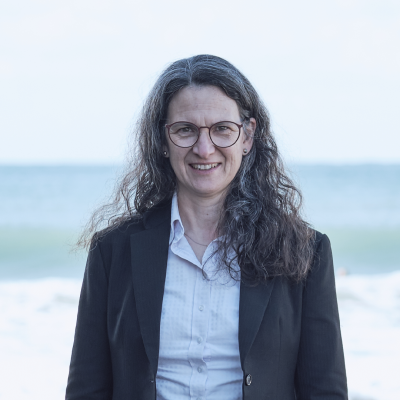
Our CEO Barbara Nebel discusses sustainability in global markets and how reporting is developing to connect practices across the world.
How is sustainability handled around the world?
Different countries and regions have their own sustainability legislation and regulations that might affect your business. You need to know what is happening in each country you trade with. Here are some examples.
Europe
The European Green Deal defines how countries trade with the EU. European laws and policies don’t apply to Australia and New Zealand but, because they cover supply chains and ethical sourcing, they become relevant if you want to trade with the EU.
The Green Deal is an ambitious climate change programme. It looks at circular economy, biodiversity, carbon, packaging and many other areas. It also introduces carbon border adjustments. This means exporters of products with a high carbon footprint pay higher tariffs.
The US
The US’s Inflation Reduction Act invests in lower-cost clean energy and energy efficiency. If you trade with the US, you need to consider how this affects your products or services. New climate laws in California require businesses to disclose their climate risks and carbon emissions.
Germany
The philosophical way governments approach sustainability differs too. In Germany, where I grew up, there’s a Ministry for Economic Affairs and Climate Action. Those two portfolios are combined, showing how the government thinks about climate change. It’s quite different in Australia and New Zealand.
How can your business show you’re meeting global sustainability regulations?
Frameworks like integrated reporting <IR> and the Global Reporting Index show regulators and stakeholders such as investors and customers what your business is doing to be more sustainable. Integrated reporting also shows how sustainability initiatives are helping your business add value.
The Task Force on Climate-Related Financial Disclosures (TCFD) framework is another global initiative. It helps your business identify and measure risks and opportunities associated with the changing climate – important information for global regulators and investors.
Globally, different groups are working to connect reporting frameworks. The International Sustainability Standards Board (ISSB) is now responsible for TCFD. ISSB is working with both the Sustainability Accounting Standards Board (SASB) and the Global Reporting Initiative (GRI) to line up the standards.
If your business follows these standards, will your work be recognised overseas?
Yes. <IR> and GRI are global approaches. Many countries have adapted TCFD requirements to make their own national standards (like the Aotearoa New Zealand Climate Standards and soon-to-be-published standards from the Australian Accounting Standards Board). Because they follow TCFD, the standards agree with other TCFD-compliant standards. This makes trade and investment easier in a connected world.
What other tools are available to show you’re meeting global standards?
Environmental Product Declarations (EPDs) also use an international framework. Australian and New Zealand importers and exporters can use EPDs to buy products from overseas and sell them to global markets because EPDs follow international standards. For example, update the shipping data on an EPD for an imported product to reflect the environmental impacts of transporting it and you’re ready to go. Europe in particular adopted EPDs early so there are many declarations available. Across the world, there are 130,000 EPDs for the production sector alone.
What do you need to be aware of when you make environmental claims – locally and globally?
Australia and New Zealand both have regulators tracking marketing claims. Other countries are very strict too. For example, in Europe a new law will ban claims about products being ‘climate neutral’ from 2026. These regulations make for fair communication and fair trading. You must be able to back up your environmental claims using data.
What’s happening globally with manufacturing products?
More than 30 years ago my grandmother gave me a pair of kitchen scissors. I still have them. The screw holding the two pieces together broke recently so I emailed the manufacturer. They happily sent me new screws and didn’t even charge me for them. That's where we need to get to.
The right to repair is gaining traction in Europe and expanding in the US. The EU’s proposal from 2023 set out several measures to promote repairing and reusing goods. This includes encouraging manufacturers to design products so they can be repaired.
California has also passed a Right to Repair Act making it easier for consumers to repair products they own. It also means manufacturers need to make their products repairable.
The International Organization for Standardization (ISO) will shortly publish standards that define and measure the circular economy. Our Head of Circular Economy Jim Goddin helped develop some of them.
Schüco, one of Germany’s largest window manufacturers, have had about two-thirds of their products Cradle to Cradle®-certified. They commit to taking back all their products because they know what’s in them and how to disassemble them.