thinkstep-anz congratulates the Sustainable Steel Council on launching Forging ahead: A roadmap to net-zero greenhouse gas emissions for Aotearoa New Zealand’s steel industry. Commissioned by the Sustainable Steel Council and developed in partnership with industry, the roadmap sets out a practical pathway to reduce direct and electricity-related greenhouse gas emissions from steel used in New Zealand buildings and infrastructure by more than 90% by 2050, without relying on offsets.
The roadmap, launched by Climate Change Minister Simon Watts reflects a major piece of work led by the Sustainable Steel Council with input from across the steel value chain.
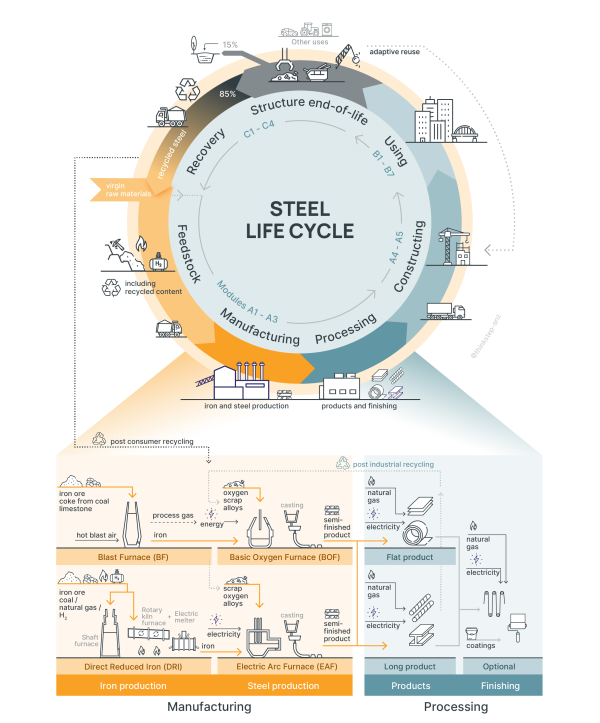
The roadmap takes a consumption-based approach, covering all steel used in New Zealand buildings and infrastructure, whether it is produced domestically or imported.
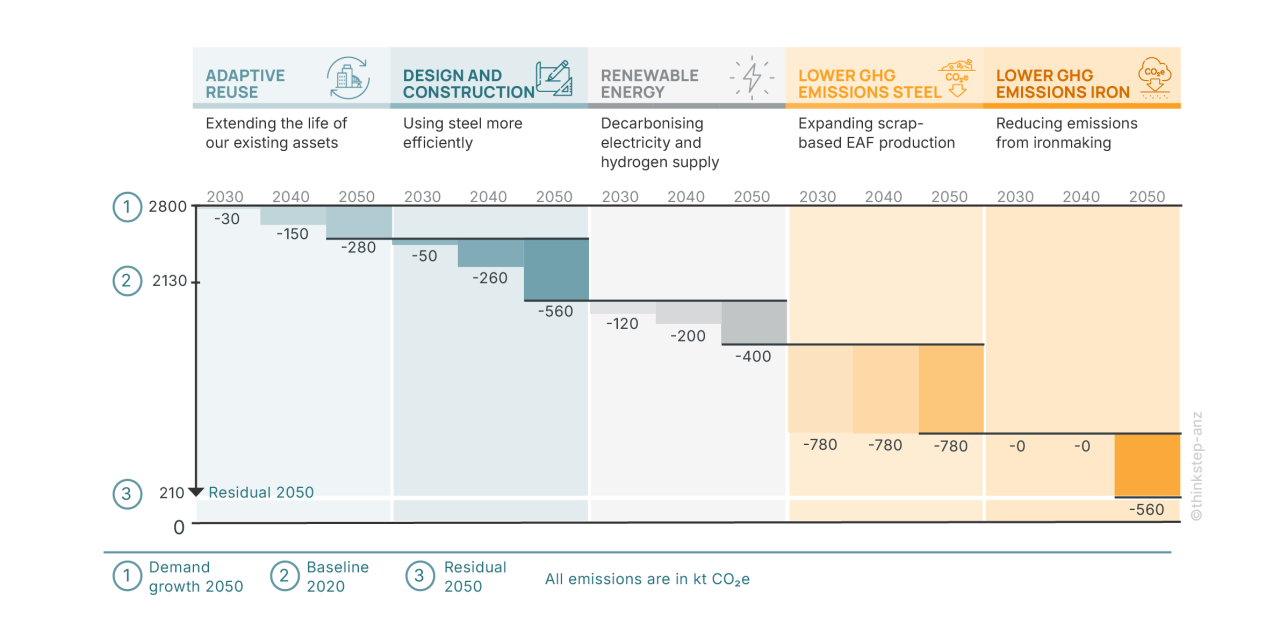
It also identifies five key strategies for cutting emissions:
Adaptive reuse: Keep existing buildings or parts of them in use for longer.
Design and construction: Use steel more efficiently so less is needed.
Renewable electricity: Power steelmaking with cleaner electricity.
Scrap-based electric arc furnace steelmaking: Make more steel from recycled scrap instead of virgin inputs.
Lower-emissions ironmaking: Cut emissions from the most emissions-intensive step in steel production
Jeremy Sole, Executive Officer of the Sustainable Steel Council, said the roadmap reflects a coordinated industry effort to reduce emissions across the full steel value chain.
“Steel is fundamental to the buildings and infrastructure New Zealand depends on every day. This roadmap shows that deep emissions reductions are achievable, but they will require coordinated action across the entire value chain.”
thinkstep-anz carried out the technical analysis and emissions modelling behind the roadmap on behalf of the Sustainable Steel Council and project partners. Our work included building the baseline, modelling emissions reductions to 2050 and helping shape and design the final report. We also worked closely with industry through stakeholder meetings and workshops to test assumptions, verify recommendations and make sure the pathway reflected industry reality.
Jeff Vickers, Technical Director at thinkstep-anz, said the modelling shows both the scale of the opportunity and the importance of collaboration.
“A reduction of more than 90% in direct and electricity-related emissions is technically achievable by 2050. The strongest progress in the near term will come from proven technologies and smarter demand, including scrap-based EAF production, increasing renewable electricity and more efficient use of steel.”
The chart above shows the actions we expect will achieve net-zero GHG emissions from iron and steel used in New Zealand by 2050.
21 April 2026