How do we cut food waste and strengthen food systems across Africa?
That’s the challenge thinkstep-anz’s Chanjief Chandrakumar helped tackle at a major G20 (Group of Twenty) workshop he co-designed in Pretoria, bringing New Zealand expertise to the global stage.
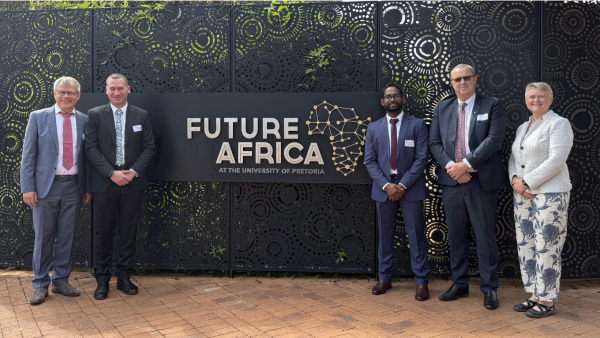
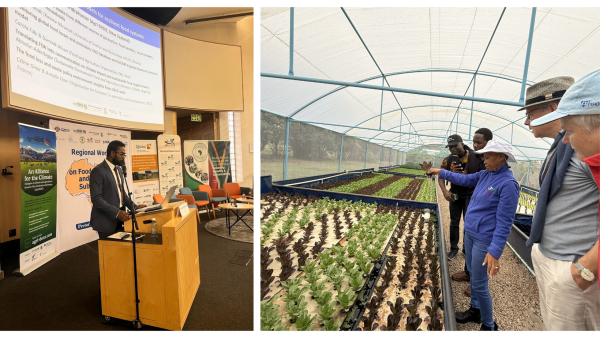
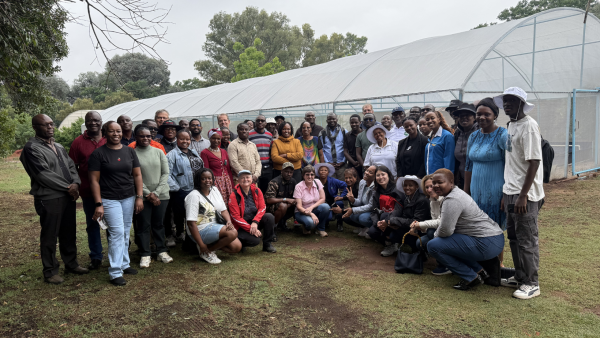
The Regional Workshop on Food Loss and Waste in Sub-Saharan Africa took place from 27–29 October 2025 at the Future Africa Campus. It brought together over 150 experts from 17 African countries and beyond to share solutions and identify regional priorities.
The workshop was part of the AgriDENZ project, a New Zealand–Germany partnership that helps reduce agricultural emissions, boost productivity, and strengthen food security. AgriDENZ builds on the work of the Global Research Alliance on Agricultural Greenhouse Gases (GRA), whose secretariat is hosted in New Zealand and funded by the Ministry for Primary Industries. The GRA coordinates global research to reduce agricultural emissions and works alongside the G20’s Meeting of Agricultural Chief Scientists (MACS-G20) – a forum for international collaboration on agricultural science and policy.
Food loss and food waste as a priority
As New Zealand’s topic lead for food loss and waste under AgriDENZ, Chanjief also chaired a session on “Better data and models for resilient food systems,” exploring how data and collaboration can help reduce food loss and build fairer, more sustainable supply chains.
“Modern problems need modern solutions,” says Chanjief. “AI, climate shifts, and new agricultural challenges – such as new disease variants – mean we can’t rely on yesterday’s tools. Innovation, collaboration, and good data will drive the food systems of the future.”
His session showcased new research from Africa and around the globe, including a tool by the FAO, GLEAM-X, that uses life cycle assessment (LCA) to link food losses to greenhouse gas emissions from livestock systems.
Unlike LCAs in sectors such as construction or manufacturing, agricultural systems are complex and vary widely by region. The GLEAM-X model helps to understand those differences and identify practical ways to reduce emissions. For example, it can compare how sheep farmed only for wool in one region produce emissions differently from sheep farmed also for meat or milk in another. The model also considers what happens to by-products like manure – whether it’s composted, used as fertiliser, or wasted – and how these choices affect emissions. The team presented the model publicly at the workshop to get feedback on how to make it more flexible and representative of real agricultural systems around the world.
Turning data into action
Chanjief says the discussions reinforced the importance of listening to local voices.
“Too often, policies are pushed onto communities. When people are heard and there’s buy-in, they want to be part of the solution – and that’s when real change happens.”
A personal commitment to reducing waste
Chanjief’s drive to reduce food waste comes from experience.
“I was born in Sri Lanka and remember our family conversations about weekly meal plans and groceries. There was never wasted food or leftovers – those lessons have stayed with me. My family also taught me the difference between wants and needs.”
After moving to New Zealand to complete his PhD studies – and later to Australia – those early lessons continued to guide his choices.
“It was five years before I bought my first car for my new family,” he recalls.
Today, as Projects and Team Lead – Life Cycle Assessment at thinkstep-anz, Chanjief applies those values at scale: helping organisations make data-driven decisions that cut waste, lower emissions and support a fairer, more sustainable future.