As Australia’s building industry sharpens its focus on circular design and material reuse, Jim Goddin, Head of Circular Economy at thinkstep-anz, has joined the Green Building Council of Australia’s (GBCA) Circular Strategies Expert Reference Panel (ERP) to help shape the next phase of sustainable construction.

The ERP brings together leading industry experts to advise on initiatives and strategies that advance the circular economy in the built environment. The panel focuses on reducing waste, extending product lifecycles, and lowering embodied carbon - helping Australia transition from a linear “take, make, dispose” model to a circular one that keeps materials in use for longer and designs out waste from the start.
Jim’s appointment reflects his deep experience in life cycle thinking, circular design and circularity metrics. He was part of the team that developed ISO 59020, the international standard for measuring circularity performance, and has been a long-time advocate for using data and systems thinking to drive sustainable transformation.
“Joining the GBCA’s Circular Strategies ERP is a great opportunity to help shape how circular economy principles are put into practice across the built environment. Collaboration across industry is essential if we want to design buildings and systems that truly keep materials circulating and deliver long-term value,” Jim said.
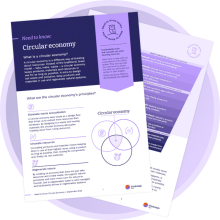
Want to know how to make the Circular Economy work for you?
Read our Need to Know guide
A new chapter for Green Star Buildings
Jim’s appointment comes as the GBCA releases Green Star Buildings v1.1, an important update to Australia’s trusted sustainability rating tool for new buildings and major refurbishments.
Since its launch five years ago, more than 700 projects have used Green Star Buildings v1 as their roadmap to create better, healthier and more responsible spaces. Version 1.1 builds on that foundation, sharpening the focus on climate action, nature and circularity, while introducing greater flexibility to make certification more accessible.
Developed in close collaboration with industry, the update reflects five years of project experience, policy alignment, and feedback from practitioners working to deliver sustainable buildings today. It’s a practical, future-focused evolution that recognises the sector’s growing commitment to circular design.
Circular design gets a boost
We’re particularly excited to see the introduction of a new Design for Circularity credit in Green Star Buildings v1.1. This credit rewards project teams for making circular choices from day one - encouraging smarter material use, adaptability, and reuse.
For the first time, the Material Circularity Indicator (MCI) and Circular Transition Indicators (CTI) are included as part of the Green Star rating assessment. This aligns Green Star with ISO 59020, the global standard that Jim helped develop, strengthening the connection between Australian practice and international circular economy measurement.
“It’s great to see the GBCA strengthening the role of circularity in Green Star Buildings. By embedding measures like the Material Circularity Indicator and aligning with ISO 59020, we’re moving from good intentions to measurable outcomes - and that’s how we’ll scale impact across the built environment,” Jim says.
Jim adds that this shift will also encourage construction product manufacturers to consider and quantify their circularity, for example through their Environmental Product Declarations (EPDs) - something a growing number of manufacturers are already doing.
Building a circular future
With experts like Jim contributing through the Circular Strategies ERP, and tools like Green Star Buildings v1.1 guiding industry practice, the momentum for circularity in Australia’s built environment continues to grow.
We look forward to seeing how this collaboration helps designers, developers, and asset owners deliver projects that are not only sustainable, but truly circular - keeping materials in play and value in the system for generations to come.
Let’s build a circular future together.
Learn how our circular economy experts can help your organisation design for sustainability and long-term value.