A more than 90% reduction in emissions from construction steel is no longer just an ambition. It is a mapped pathway.
Commissioned by the Sustainable Steel Council and developed with industry, Forging ahead: A roadmap to net-zero greenhouse gas emissions for Aotearoa New Zealand’s steel industry outlines a practical way to cut direct and electricity-related greenhouse gas emissions from steel used in New Zealand buildings and infrastructure by more than 90% by 2050, without relying on offsets.
Underpinned by technical analysis and emissions modelling from thinkstep-anz, the roadmap shows what decarbonisation could look like across the sector and what is needed to get there.
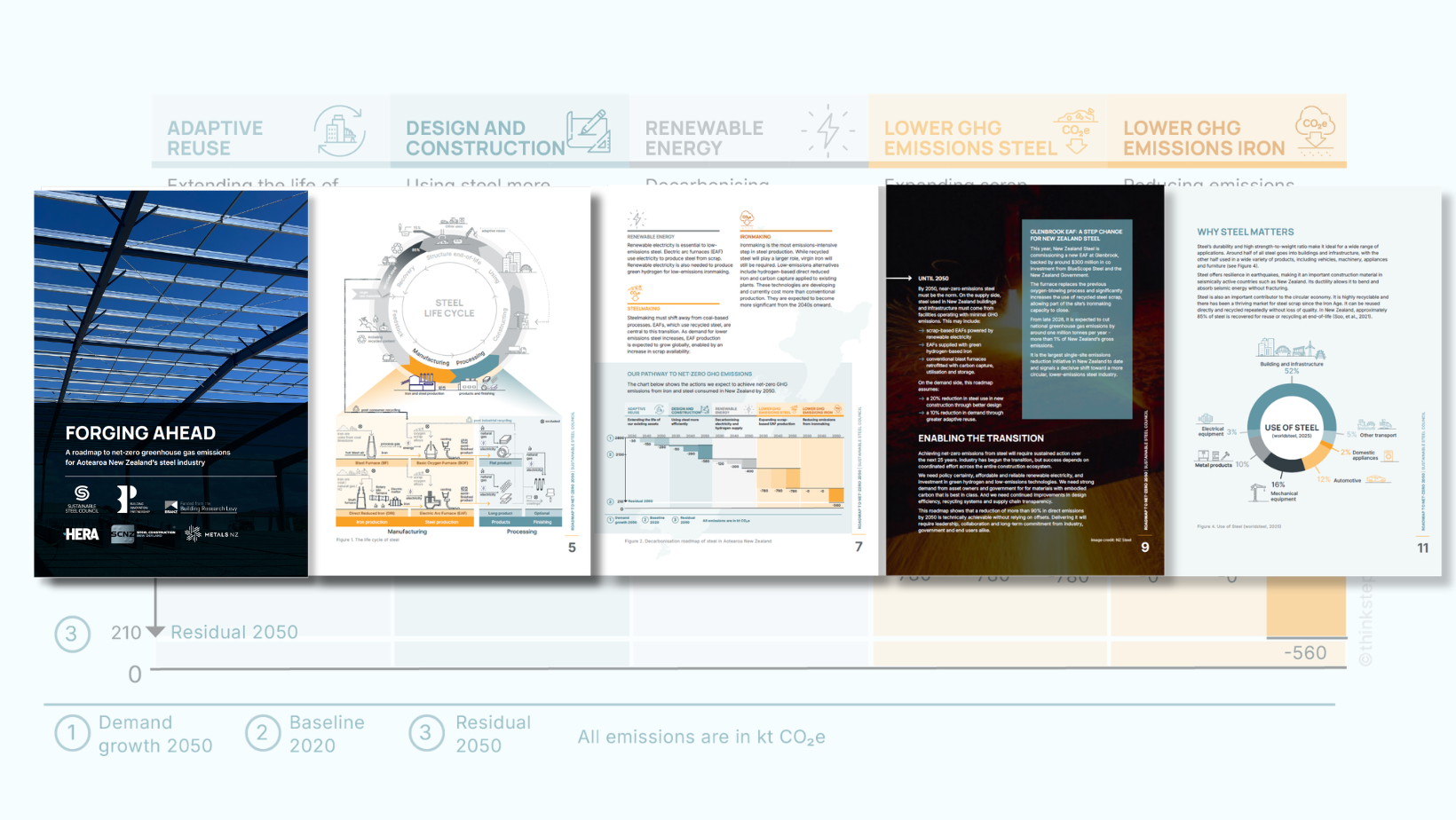
Launched at Parliament on 21 April by Climate Change Minister Simon Watts, the roadmap marks a shift from high-level targets to practical delivery.
Bringing together industry, government and research, it provides a single evidence-based framework grounded in life cycle thinking, data and sector-wide collaboration. Rather than simply outlining the challenge, it identifies the biggest opportunities and shows how different parts of the value chain need to work together.
A clear message emerged at the launch: the pathway is defined, the tools largely exist and the sector is ready to move.
So what matters most? Here are the key takeaways from the event:
1. From ambition to action - grounded in evidence
This is not just another strategy document. It is a technically robust, evidence-based pathway developed through collaboration across the sector.
As Climate Change Minister Simon Watts put it, “this roadmap is more than just a milestone. It is an escalation of intent.”
The analysis led by thinkstep-anz underpins this shift - turning ambition into something measurable and actionable.
2. Credibility matters - and this roadmap delivers
A recurring theme throughout the evening was the strength of the technical work.
As BRANZ’s CEO Claire Falck noted, “the technical depth, clarity and rigour behind this roadmap are a credit to you… a credible guide for action, not just aspiration.”
thinkstep-anz’s role in developing the modelling, lifecycle perspective, and emissions pathways was central to ensuring the roadmap stands up to scrutiny.
3. Growth and decarbonisation can go together
Minister Watts challenged the idea that climate action is a constraint:
“For too long, the conversation… has been framed as cost or constraint… we see it as an opportunity.”
This reflects a shift towards seeing decarbonisation as a driver of resilience and competitiveness.
4. The pathway is ambitious, but achievable
The roadmap sets a clear target - more than 90% emissions reduction by 2050.
As our Technical Director Jeff Vickers emphasised, “this roadmap is possible. It is achievable, but it requires the whole sector… to work together.”
The pathway is grounded in practical steps and existing capabilities.
5. The solutions already exist - now it is about implementation
Many of the required solutions are already available today.
As Jeremy Sole, CEO, Sustainable Steel Council, noted, “almost all the elements required are already in existence and available today.”
The challenge now is scaling these solutions across the sector.
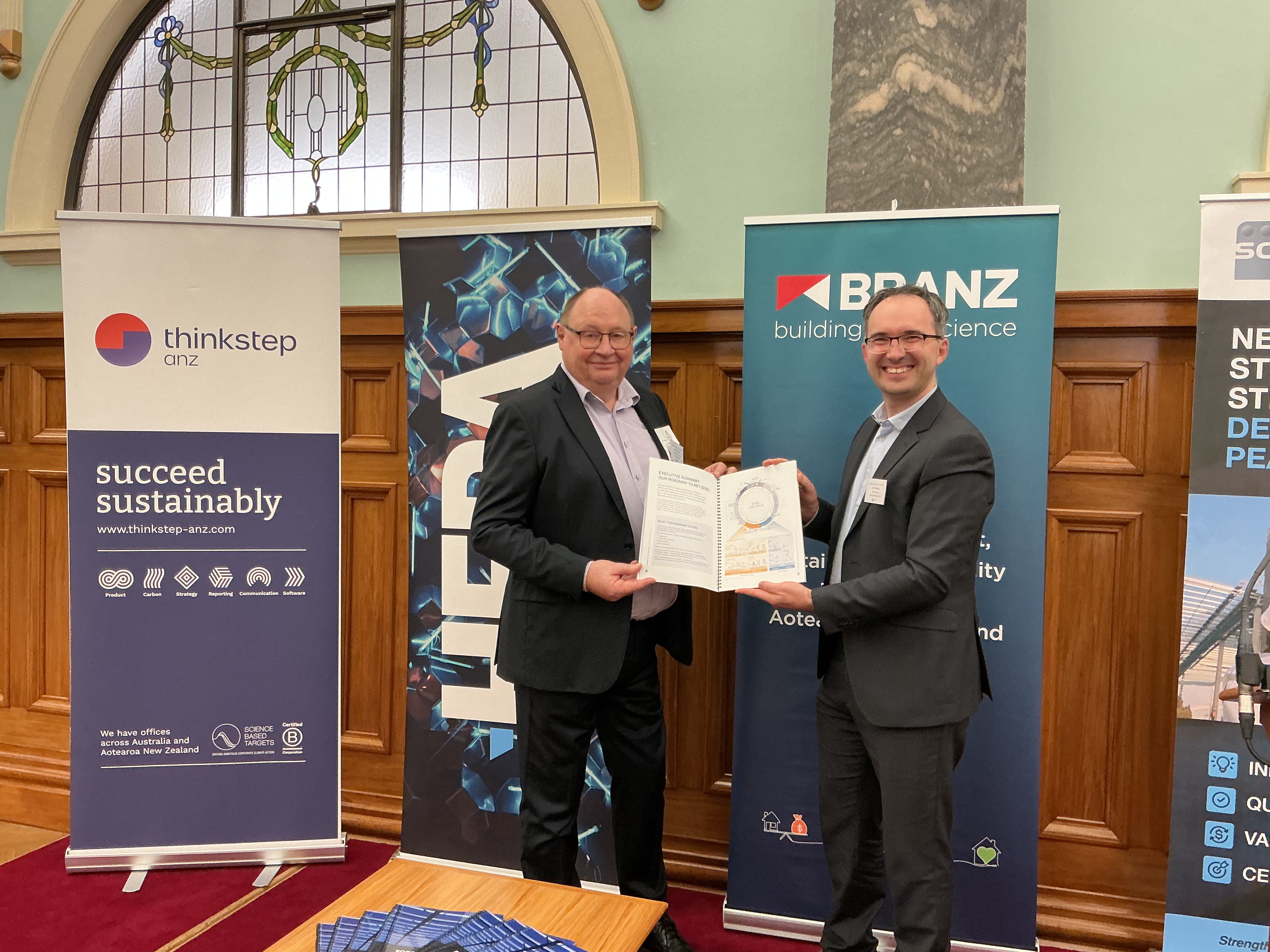
Jeremy Sole, CEO of Sustainable Steel, with thinkstep-anz's Technical Director Jeff Vickers.
6. A full lifecycle perspective is critical
One of the defining strengths of the roadmap is its lifecycle approach.
As highlighted during the discussion, “the environment does not understand buildings… it understands materials.”
This perspective ensures emissions are considered across the full lifecycle, not just upfront.
7. Steel’s circular potential is a major opportunity
Steel’s ability to be reused and recycled is a key advantage.
Minister Watts described current recycling rates as “a fantastic foundation.”
The roadmap builds on this by highlighting the role of circular strategies such as adaptive reuse.
8. Collaboration made this possible
The roadmap reflects input from around 100 stakeholders across the value chain.
As Professor Larry Bellamy from the University of Canterbury noted, “no organisation can solve these sorts of challenges alone.”
This level of collaboration will also be critical for delivery.
9. Momentum is already building
Andrew Eagles, CEO, New Zealand Green Building Council, highlighted that change is already underway:
“Building green is more expensive… we are flipping that on its head.”
He also reinforced the importance of reuse: “we should all love our existing buildings more.”
10. Policy and market signals will be critical
The transition will not happen through technology alone.
It will require:
- Clear and consistent policy settings
- Demand for low-emission materials
- Better data and aligned methodologies
- Confidence for long-term investment
This is only the starting point
The roadmap provides direction, but delivery is the real test.
As highlighted during the event, it is “a credible guide for action, not just aspiration.”
The next step is implementation - turning this into real-world decisions across design, procurement, and policy.
The launch marked an important milestone, but more importantly, it reflects growing alignment across industry, government and research.
The pathway is clear.
The solutions are known.
The focus now shifts to delivery.
This is the third national decarbonisation roadmap that thinkstep-anz has supported for an industry or sector, building on previous work with the cement and concrete sector and the New Zealand wine industry. Together, these projects demonstrate how robust data and lifecycle thinking can help turn ambition into practical action.
For associations or organisations exploring what this transition means for them, or considering a similar roadmap, thinkstep-anz can help shape a practical, evidence-based approach.