We’re thrilled to see the publication of the Issues Paper Embodied Carbon Emissions in Australia’s Built Environment by the Australian Sustainable Built Environment Council (ASBEC).
We worked with ASBEC, NABERS, the Australian Department of Climate Change, Energy, the Environment and Water (DCCEEW), Mansfield Advisory and ASBEC’s members to develop the Issues Paper with the aim of delivering a Comprehensive Policy Framework later this year. The framework will outline policy levers that will support action on reducing upfront embodied carbon emissions.
ASBEC's Issue Paper: Embodied Carbon in Australia's Build Environment
The Issues Paper gathers stakeholder insights on upfront embodied carbon policy options for Australia’s built environment. While operational emissions remain a priority, the spotlight is now on upfront embodied carbon - emissions from construction materials and processes. Upfront emissions are crucial, accounting for around 70% of all embodied carbon.
“Reducing embodied carbon requires a holistic policy framework that includes clear guidance and robust, measurable targets and coordinated efforts across all sectors,” says thinkstep-anz’s Impact Director Nicole Sullivan who managed the project. “Immediate action on upfront embodied carbon is essential to prevent locking in high emissions from the construction phase. We need to create new solutions and align our efforts across the whole built environment sector. The time to act is now,” she adds
Successful reduction of embodied carbon requires alignment across jurisdictions and support for the supply and value chains. This includes better products and services, design and construction outcomes, and policies tailored for different sectors.
Extensive research
Based on research findings from Australia and abroad, the paper highlights the issues that need to be addressed to successfully tackle embodied carbon and to achieve Australia’s commitment to net zero carbon emissions by 2050.
- For the research, we reviewed 250 national, state and city regulations, policies and action plans from over 20 countries, including 104 regulatory instruments.
- We researched 34 further sources using a defined parameter set to extract information to inform Australia’s directions for government and industry.
- We then analysed 30 leading policy sources from 11 countries.
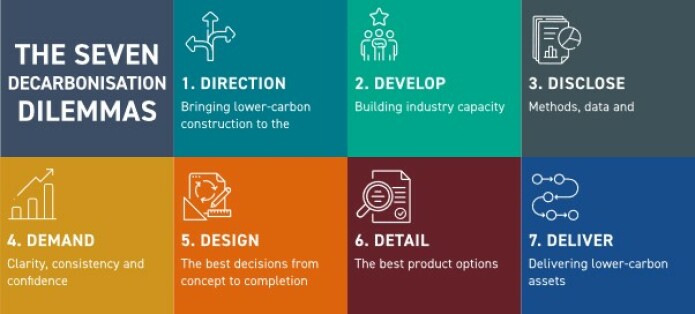
The issues are presented as seven decarbonisation dilemmas. They are problems that must be solved first to build momentum so that other changes can follow.
Feedback sought
ASBEC is now asking for stakeholder feedback. We invite you to read the issues paper and share your ideas and information on what should be considered so ASBEC can provide the best advice to industry and policy-makers.
“We are now excited to hear the industry’s feedback so ASBEC can develop transformative policy recommendations that are practical and have industry buy-in,” Nicole adds.
The survey is open until 26 July.