Being first was never the goal for David Trubridge.
Being honest was.
When the New Zealand design company developed its first environmental product declaration (EPD) in 2015, it wanted credible, independently verified information about its products – even if the findings were not as positive as it hoped.
The EPD built on David Trubridge’s earlier use of life cycle assessment (LCA) to understand and reduce the environmental impacts of its lighting. The insights have influenced product design, manufacturing and material choices, while delivering practical benefits for the business and its customers.
The results at a glance
→ LCA insights helped drive the move to kitset lighting
→ Significantly lower shipping volumes, freight costs and emissions
→ Production became easier to scale
→ Credible information for customers, architects and designers
→ Evidence used in David Trubridge’s B Corp application
→ More than a decade working with thinkstep-anz
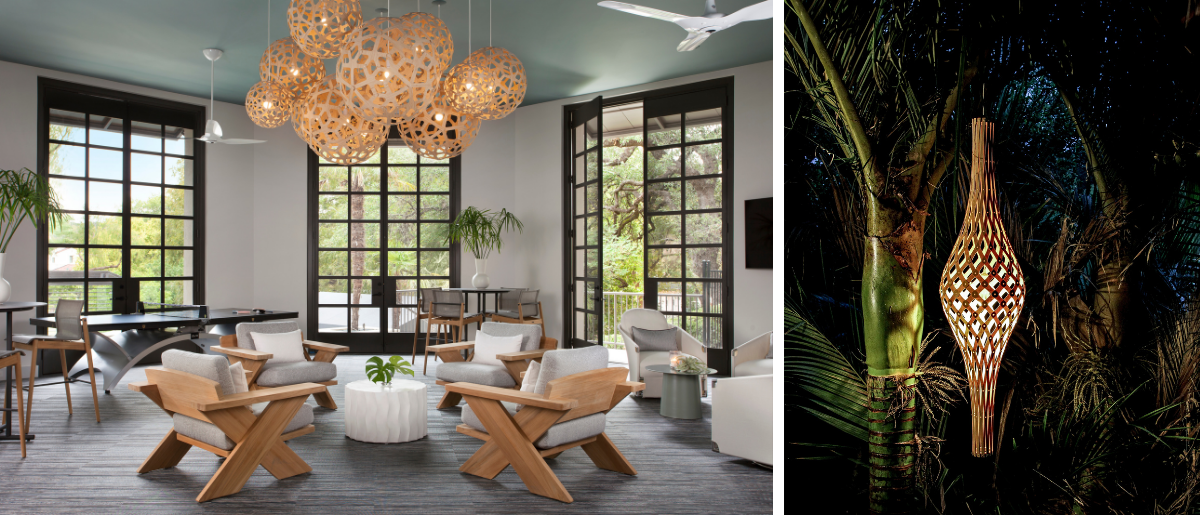
David Trubridge Coral and Nikau lights
The challenge
David Trubridge had always considered the environment in its designs. But strong values were not enough. The company wanted to know where its products’ impacts occurred and whether its decisions stood up to scrutiny – even if the findings were uncomfortable.
Getting reliable answers was difficult. A seemingly simple light contained more materials and processes than expected, and suppliers could not always provide detailed information. The team also faced complex trade-offs. Bamboo is renewable but requires energy and adhesives to become plywood. Birch uses timber efficiently but travels from Finland. Cheaper alternatives can come from clear-felled forests.
David Trubridge needed a credible way to compare these options, improve its products and support its environmental claims with evidence.
“We’ve always been more concerned with being honest than being conventional.
It’s not a marketing exercise; it’s an accountability exercise.”
What we did
David Trubridge’s use of LCA began before its first EPD. An early assessment of one light identified freight as an important source of emissions. In response, the company redesigned its leading lights so they could be packed flat and then assembled by customers.
Having used the findings to improve its products, David Trubridge wanted a credible way to publish the wider environmental story. thinkstep-anz worked with the company to develop its original EPD in 2015 – the first registered under the newly launched Australasian programme.
We have continued working with the team as its products, processes and environmental information have evolved. The latest EPD, published in July 2026, covers 52 products and size variants across 15 lighting families.
Our long relationship has given us a strong understanding of the company, its products and the values behind them. It has also allowed each update to build on earlier information and insights.
The impact
→ Smarter design and lower freight impacts
An early LCA identified freight as a major source of emissions. This prompted the move to kitset lighting. Around 40 flat-packed lights occupy the same freight space as one assembled light, reducing freight emissions and costs.
→ Easier production and business growth
Kitsets were less labour-intensive to produce, making production easier to scale. Lower production and freight costs contributed to turnover quadrupling within three years.
→ Better-informed decisions
David Trubridge continues to use its LCA and EPD insights when assessing materials, manufacturing processes and opportunities to reduce its footprint.
→ Credible evidence for customers
The EPD gives architects, designers and customers independently verified information. It supported David Trubridge’s B Corp application and helped answer requests from organisations including Google and Gensler Architects.
“The main benefit has been being able to back up what we say with something independently checked, rather than asking people to just take our word for it.”
David Trubridge
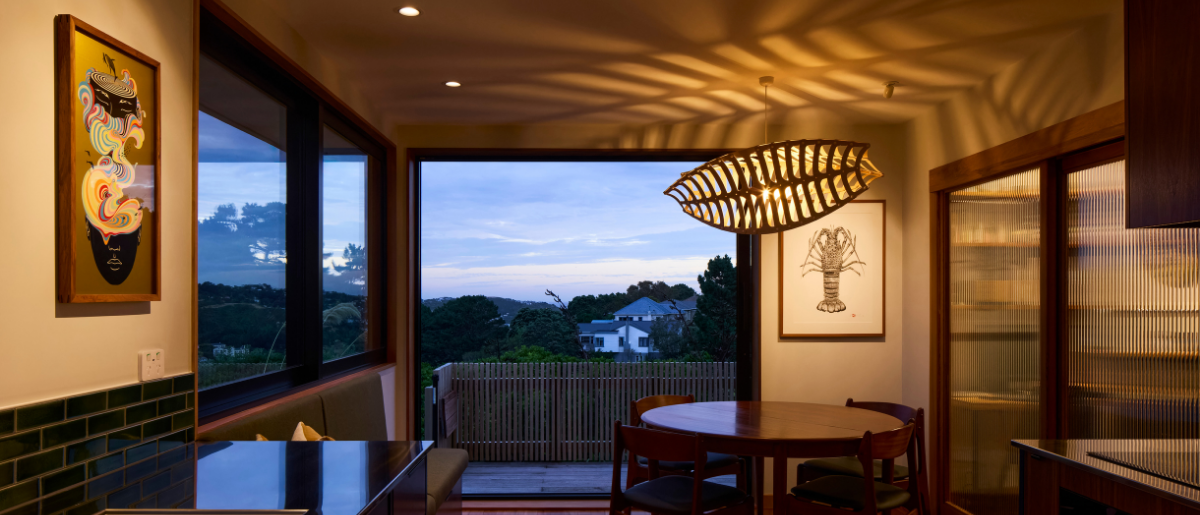
David Trubridge Toru light
About David Trubridge
David Trubridge is a New Zealand design company known internationally for its sculptural lighting. Based in Hawke’s Bay, its designs draw on patterns and forms found in nature. The company is a certified B Corp and focuses on long-lasting design, efficient use of materials and open communication about its environmental impacts.