The challenge
Food and beverage producers are under growing pressure to reduce the environmental impacts of packaging while maintaining product protection, shelf life and efficient distribution. At the same time, the packaging landscape continues to evolve. Designs are becoming lighter, recycling systems are expanding and more materials now include recycled or renewable content.
Tetra Pak Oceania asked thinkstep-anz to update its 2021 Life Cycle Assessment (LCA) to reflect these changes and provide robust, independent data on the environmental performance of beverage packaging in Australia and New Zealand.
The goal was to compare carton packaging with other commonly used formats and assess their impacts across the full life cycle.
What we did
We carried out a comparative LCA of beverage packaging systems available in the Australian and New Zealand markets. The assessment covered packaging sizes from 200 mL to 2 L across product categories including milk, juice, ready-to-drink coffee and protein drinks. Cartons were compared with a range of packaging formats including PET and recycled PET bottles, HDPE bottles, aluminium cans, glass containers and pouches.
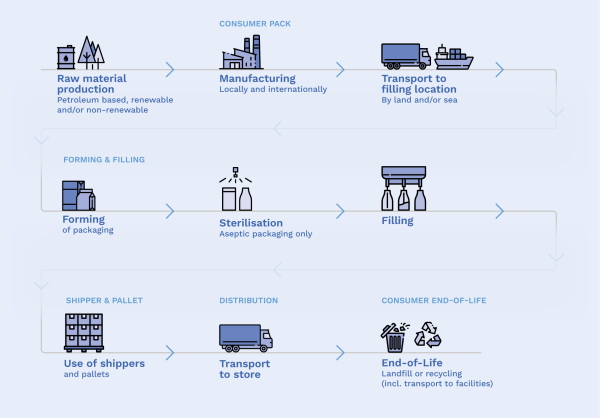
We assessed environmental impacts from the entire life cycle of each packaging option from raw material production and packaging manufacture through to filling, transport and end-of-life management.
In addition to the detailed LCA report, we developed a short “nutshell” report written in plain English to make the key insights accessible to customers and other stakeholders. Download it here.
What we found
The assessment found that cartons have the lowest carbon footprint of all beverage packaging options in Australia. In New Zealand, cartons have one of the lowest carbon footprint of all packaging options.
This performance is largely driven by the lightweight design of cartons and their high share of paperboard, which has a relatively low impact per kilogram compared with many alternative materials.
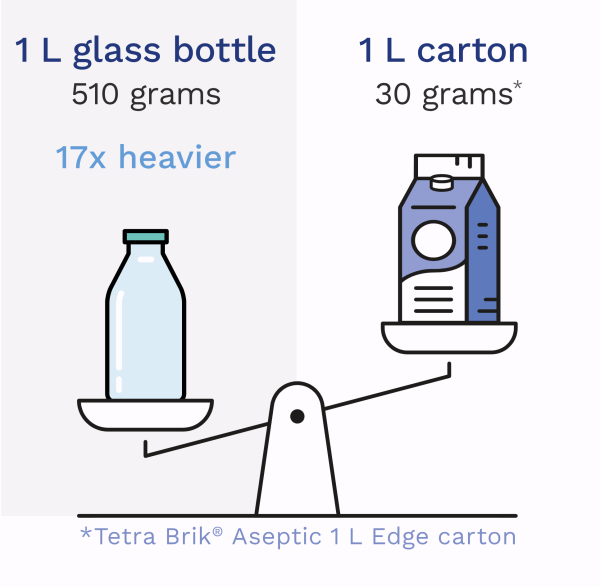
The study also found that cartons are highly material-efficient. In most cases, they require less packaging material to deliver the same volume of product compared with other formats.
To test the robustness of the results, we analysed how they changed under different conditions. This included looking at what happens to cartons at the end of their life, how much recycled material is used in glass and aluminium packaging, how recycling affects their carbon footprints, how biogenic carbon is treated when cartons are recycled, and how transport distances influence results.
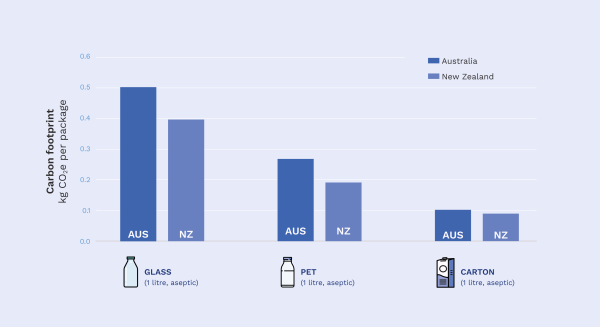
Across all scenarios tested, cartons consistently showed the lowest or equal-lowest carbon footprint. They also performed well across several environmental indicators compared with other packaging formats. Over their full life cycle, cartons use the least water and produce the lowest emissions that contribute to acidification.
“We wanted to give the market a clear and credible comparison of beverage packaging systems in Australia and New Zealand,” Sharon Tan, Tetra Pak Marketing Manager Oceania said. “By partnering with thinkstep-anz, we were able to update our life cycle assessment using independent analysis and ensure the results reflect current packaging technologies and recycling systems.”
How this supports Tetra Pak Oceania to succeed sustainably
The study provides robust, peer-reviewed data to support more informed packaging decisions across the food and beverage sector.
It also gives Tetra Pak Oceania an evidence-based foundation to communicate the environmental performance of its packaging systems to customers and stakeholders, identify opportunities to reduce packaging emissions and support innovation in lower-impact packaging solutions.
You can find the full report and Tetra Pak's other LCAs on the Tetra Pak website.