
When engineering and construction company Electrix needed a tailored framework and maturity assessment to advance their sustainability programme, they turned to thinkstep-anz. French-owned Electrix is one of New Zealand’s largest providers of engineering, construction and maintenance services.
We began with a gap assessment, engaged with stakeholders and completed a materiality assessment and built internal engagement using the SDGs.
Electrix use their sustainability strategy and practical action plan to strengthen their brand, build a strong client base, and attract, engage, and retain talented team members.
How we have helped Electrix
Stage 1: reviewing Electrix’ sustainability programme
We began with a maturity assessment to understand where Electrix sat on the ‘sustainability maturity curve’ (from an ‘ad hoc’ starting point to a position of ‘sustainability leadership’). We then identified where the business wanted to be, and current gaps in its programme. Using this information, we built a roadmap of sustainability activities and set a baseline for measuring progress.
Stage 2: identifying what matters to Electrix’ stakeholders
We carried out a materiality assessment to engage Electrix’ stakeholders. The first step involved identifying major stakeholders: internal team members, external clients, Electrix’ parent company and local communities. This provided a good cross-section of feedback.
A series of stakeholder interviews, focus groups and surveys followed to identify and rank ‘material issues’. When it comes to sustainability what do you care about? What do you want Electrix to do and report on? We used the results to draw up a shortlist of issues.
Stage 3: bringing stakeholder and business views together
In a facilitated workshop, we asked the Electrix leadership team to add their views: what would be the impact on the business if a material issue was managed poorly? And if it was managed well?
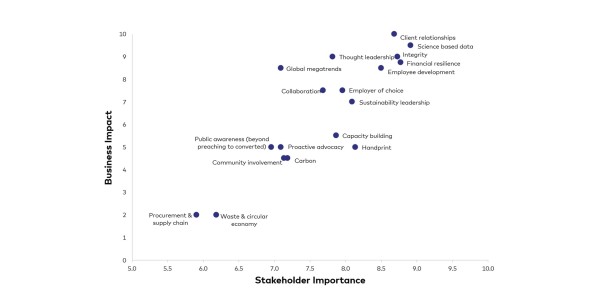
The result was a materiality matrix; (generic example below) which plotted stakeholder concerns against potential business impact. This matrix helped Electrix’ leadership prioritise issues in its sustainability strategy and understand where these priority issues ‘sat’ in the business. Who was responsible? What progress were they making? What did they need to achieve? How were they reporting outcomes?
Stage 4: building internal engagement around the SDGs
Team engagement is vital to any sustainability programme. Helping employees understand how the business can contribute to ‘the big picture’ – the United Nations’ 17 Sustainable Development Goals (SDGs) – is a good place to start. Our SDG workshop with Electrix’ middle management classified Electrix’ activities against the UN goals and identified actions for progress. It also highlighted links between social and environmental goals and the value of systems thinking. Electrix chose to align to six of the 17 SDGs.
How our work is helping Electrix to succeed sustainably
Strong sustainability strategy, wide business benefits
Our work has helped Electrix build a strong sustainability strategy and practical action plan based on issues that matter to the New Zealand business. This has included clear governance, targets for action, and systems to report on progress and issues. The company can now genuinely show sustainability leadership.
The process we followed has helped the company strengthen relationships with stakeholders, identify business opportunities, make people more aware of sustainability and reduce carbon emissions. All these activities are helping Electrix strengthen their brand, build a strong client base, and attract, engage, and retain talented team members.
Clearly defined next steps
Electrix is now sharing their progress with clients and contractors. They have significantly improved their environmental, community and economic focus and continue to make progress.