The challenge
With demand for transparent, reliable sustainability data on the rise, manufacturers are under increasing pressure to provide clear evidence of their products’ environmental impacts.
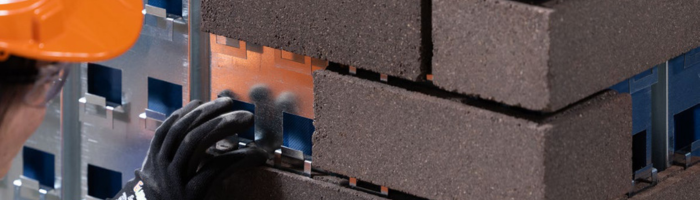
Brickworks, one of Australia’s largest building material companies, was extending its range with the innovative Thin Tech Plus and Tru‑Brix cladding systems. These systems use thin brick veneers mounted on steel frames, enabling the look and durability of brick without the weight of traditional construction.
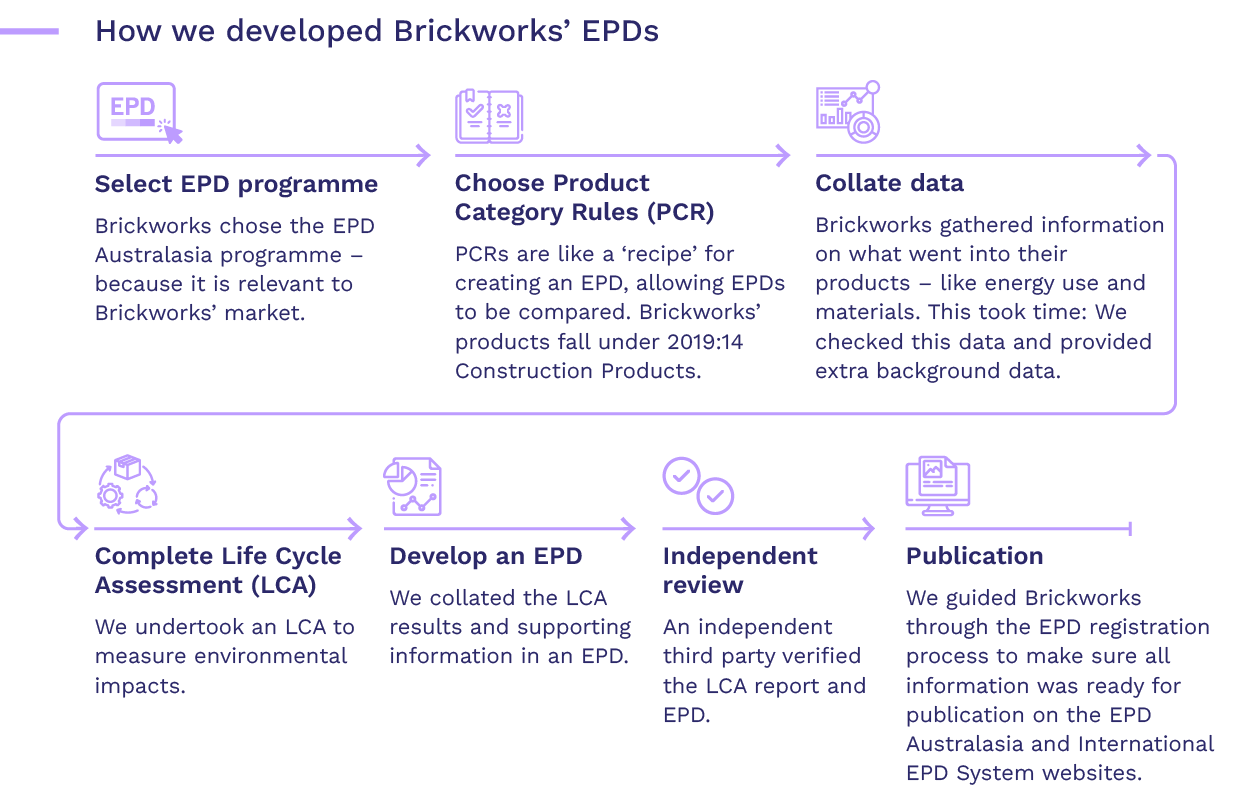
Because these products differ significantly from conventional brickwork, existing data and benchmarks did not accurately represent their environmental impacts. To give customers the robust, comparable data they expect, Brickworks knew the new cladding systems would need an environmental product declaration (EPD).
EPDs are a cornerstone of Brickworks’ sustainability strategy, with more than 1,000 products across Austral Bricks, Austral Masonry and UrbanStone now covered by EPDs. To support this work, the company partnered again with thinkstep-anz to develop declarations that measure and clearly communicate the systems’ environmental performance, particularly their carbon footprint compared to standard brick construction.
Why EPDs matter
Embodied carbon – the emissions from producing and transporting materials – accounts for a significant share of a building’s footprint. Increasingly, tenders for major projects require data on embodied carbon up front. EPDs provide that data. They are internationally recognised, independently verified and feed into key Australian tools and frameworks, including Green Star, the Infrastructure Sustainability Council’s IS rating tool and the NSW BASIX residential sustainability tool.
They also align with the goals of industry initiatives such as the Materials & Embodied Carbon Leaders’ Alliance (MECLA) and government programmes like Climate Active.
Brickworks uses EPDs as benchmark for ongoing improvement, focusing on responsible sourcing of raw materials, increasing recycled content and improvement of manufacturing processes to reduce environmental impact.
Corey Vutukuri, Brickworks’ Research and Technical Engineer, explains that the main driver for developing EPDs is to support customers. ‘We want to help our customers achieve their sustainability ambitions by giving them robust, accurate data and greater transparency, so they can make informed decisions with confidence.’ At the same time, the process has enabled Brickworks to identify emissions hotspots in its supply chain.
The impact
With EPDs for more than 1,000 of their products, Brickworks has positioned itself as a leader in building a more transparent and sustainable construction industry. EPDs for its Advanced Cladding range were published in early 2025. These EPDs now give architects and designers instant access to reliable environmental data, which they can clearly compare to other products with EPDs on the market. It also makes it easier for those architects and designers to achieve certifications such as Green Star, IS rating and BASIX.
For Brickworks, the EPDs are more than a compliance tool, they’re a roadmap for reducing emissions and strengthening the local supply chain. For example, the LCA revealed that producing purpose-made brick facings directly at the Rochedale (QLD) and Golden Grove (SA) sites could significantly cut transport-related emissions.
At present, whole bricks are trucked interstate – from Queensland and South Australia all the way to Punchbowl in New South Wales – where they’re cut thinner to make facings. Transporting these heavier, full-sized bricks such long distances adds significantly to emissions. It also highlighted opportunities to source more steel components locally, further reducing embodied carbon while supporting Australian manufacturing.
Lessons learned
High-quality data collection was key to the project’s success. Corey Vutukuri’s advice to others: start gathering good data as soon as possible.
‘thinkstep-anz provided excellent support throughout the process. They were always available to answer questions and clarify details, which made the experience efficient and free of delays. The team quickly understood our complex manufacturing process and created a clear data collection template that made the task straightforward.’
About Brickworks
Brickworks manufactures and sells Australian-made and imported clay bricks and pavers across multiple brands. It has made sustainability a core part of its business strategy. Having already cut emissions in Australia by more than half since 2006, the company is now targeting a further 15% reduction in scope 1 and 2 emissions by 2030 from its 2022 baseline.
As part of its strategy, Brickworks has embraced EPDs. The company published its first EPD in 2022. Today, it has more than 24 EPDs covering over 1,000 products, from clay bricks and concrete pavers to masonry blocks and façade systems. These EPDs give customers clear, verified information about the environmental performance of Brickworks products.