When you think about human rights, what comes to mind? For many of us, it might be global issues like child labour or unsafe working conditions in faraway factories. But human rights are just as relevant here in Australia and Aotearoa New Zealand, especially for manufacturers. Whether you’re producing food, machinery or textiles, respecting human rights isn’t just the right thing to do—it’s also a smart business move.
In this article we explore why human rights should matter to manufacturers, the risks of inaction, and the first steps you can take to integrate human rights into your operations and supply chain.


Why human rights matter to your business
Every business must respect human rights, as outlined in global standards like the United Nations Guiding Principles on Business and Human Rights. This responsibility goes beyond direct employees and also includes contractors, suppliers and even customers.
But why does this matter to manufacturers specifically?
- Strengthening reputation
Today’s consumers and business partners care about ethics. They want to buy products made responsibly - and they’re often willing to pay a premium for it. Companies committed to human rights can strengthen their brand, attract loyal customers and even access new markets. - Meeting legal and regulatory expectations
Human rights laws and regulations are tightening worldwide. In Australia, for example, the Modern Slavery Act requires businesses to report on risks of slavery in their operations and supply chains. New Zealand may soon follow suit. - Improving employee morale and retention
Workers want to feel proud of where they work. A manufacturer that respects human rights creates a positive workplace culture, reducing turnover and attracting talent in a competitive labour market. - Minimising business risks
Ignoring human rights can lead to costly disruptions. For instance, allegations of forced labour or unsafe conditions can lead to product recalls, damaged relationships with buyers or lawsuits. The cost of preventing human rights infringements is far lower than the cost of a scandal.

The risks of not taking action
Failing to address human rights can harm your business in multiple ways, including legal, financial, and reputational damage. Here are some specific risks:
- Supply chain disruptions
Unethical practices in your supply chain can result in delays, lost contracts or sudden changes in supplier relationships. For example, discovering forced labour at a supplier’s factory might force you to find a new source quickly, which could delay production. - Customer backlash
Modern consumers are quick to call out unethical behaviour. Social media can amplify issues overnight, damaging your reputation. Boycotts or negative publicity can hurt sales and erode trust. - Lost business opportunities
Large retailers and international buyers often have strict requirements around human rights. If you can’t prove ethical practices, you may lose out on lucrative contracts. - Legal consequences
Non-compliance with local and international human rights laws can result in fines, bans, or lawsuits. Global supply chains mean you’ll likely have to comply with stricter standards from various markets.

First steps to take
Tackling human rights might feel overwhelming, but you don’t have to start from scratch. Here are three practical steps you can take to get started:
1. Understand your risks
The first step is to map your operations and supply chain to identify potential human rights risks. This includes examining your own workplace and extending that scrutiny to your suppliers.
Key areas to investigate include:
- Working conditions (e.g., health and safety, wages, hours)
- Vulnerable workers (e.g., migrants, casual workers or young workers)
- High-risk industries or regions (e.g., suppliers operating in countries with weak labour laws)
Engage your employees and suppliers in this process. Honest conversations can uncover risks you might not have been aware of.
2. Develop a policy and plan
Once you understand your risks, outline a human rights policy that commits your business to ethical practices.
A good policy should:
- State your commitment to human rights
- Outline expectations for employees, contractors, and suppliers
- Include mechanisms for reporting and addressing issues
This policy should be backed by a clear action plan, with measurable goals and timelines. For example, you might aim to audit 50% of your suppliers for human rights risks within the next year.
3. Build accountability and transparency
Transparency is key to gaining trust. Regularly communicate your progress to stakeholders through sustainability reports, customer updates, or supplier meetings.
Build accountability by:
- Appointing someone within your business to lead human rights efforts
- Training staff to identify and address risks
- Establishing a grievance mechanism where workers and suppliers can report concerns safely.

Support and resources
You don’t have to do this alone. Organisations like the Australian Human Rights Commission and the New Zealand Sustainable Business Council (SBC) offer tools and guidance tailored to Kiwi businesses.
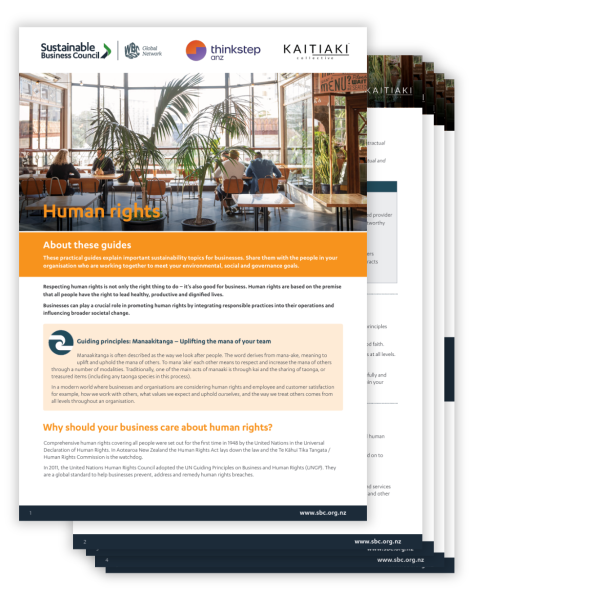
For example, the SBC’s guide to human rights, thinkstep-anz has worked on together with Kaitiaki Collective provides practical steps.