Environmental Product Declarations (EPDs) used to sound like expensive project delays or extremely painful documents. In practice, they often turn out to be something very different: excellent profit drivers.
Creating an EPD takes work – collecting and verifying detailed life-cycle data – but the payoff is big. The reward is clarity, credibility and commercial advantage.
Here are nine reasons why investing in an EPD is a smart business move:
1. Become a preferred supplier
Many construction and infrastructure projects expect or require EPDs. Products with an EPD can help clients gain points under Green Star or ISC. This makes your product more attractive and often gives you a ticket to the game in tenders.
2. Competitive edge in tenders
An EPD shows you have measured and verified your environmental performance. It gives sales teams the evidence they need. What the finance team may call expensive and painful becomes delightful when the EPD helps win a tender.
3. Fast-track carbon neutrality
An EPD’s underlying life cycle assessment (LCA) covers many main scope 3 categories. This means you get solid data showing where most of your product’s carbon emissions occur - from raw materials to end-of-life - so you can target reductions where they matter most.
4. Supply chain management
Creating an EPD forces you to understand your supply chain in detail. This whole-of-life scrutiny reveals environmental impacts as well as potential societal risks. If you want to identify and address those risks proactively – before a competitor or regulator does – an EPD and its underlying LCA are essential.
5. Marketing
Another critical element is marketing. This is where an EPD becomes your most valuable defence. It’s the moment when the legal person on your product team turns to the engineer and demands, “Evidence, Please, Darling - EPD!”
Why the urgency? Because you can’t make environmental marketing claims without solid proof. In today’s market, regulators (and customers) expect every “sustainable” or “low-carbon” claim to be backed by verified data. An EPD provides exactly that.
6. Environmental management
For companies seeking ISO 14001 certification - the international standard for effective environmental management - an EPD provides proof of compliance. ISO 14001 now requires organisations to show life cycle thinking in how they manage environmental impacts. An EPD offers clear proof that you understand your environmental impacts and supply chain. It makes conversations with auditors straightforward.
7. Innovation
Because an EPD is based on a full LCA, which maps out all environmental impacts, it shows you where emissions, waste or resource use occur. This whole-system view helps you improve performance without ‘burden shifting’ – fixing one problem to create another. Product teams can use these insights to target real innovations processes, materials, or designs that reduce overall impact.
8. Cut costs
The EPD process forces you to analyse your data closely, quickly revealing opportunities to streamline operations and reduce the energy and resources you use. It also reduces sales and tendering costs, with all your verified environmental credentials in one document.
And because an EPD lasts five years – with updates required after major product changes – it becomes a powerful internal tool.
9. Benchmark your progress
Because EPDs must be updated when products change, they help you track improvements over time. You can demonstrate reductions, monitor performance and show progress to clients and investors.
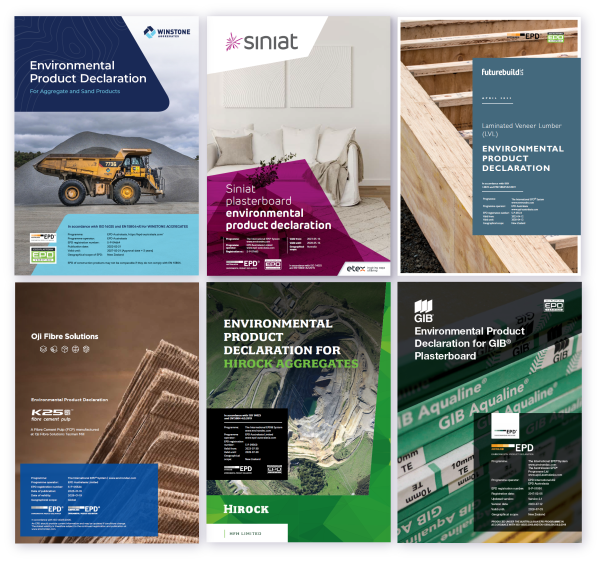
How does LCA fit in?
An LCA sits at the heart of every EPD. Completing an LCA brings together people from across your business - finance, procurement, sales, marketing, sustainability and product development. This collaboration builds shared understanding, breaks down silos and strengthens how you approach sustainability.
A powerful business tool
EPDs strengthen your business across four areas:
- Revenue: Win more tenders and open new markets.
- Brand: Share a credible environmental story backed by data.
- Cost reduction: Identify efficiencies and simplify tendering.
- Risk management: Understand your supply chain and prepare for change.
An EPD may start as an Extremely Painful Document, but it soon becomes an Excellent Profit Driver.