How you talk about your business’s sustainability efforts can make or break your reputation. Communicating poorly, or not at all, risks damaging your reputation, losing customer trust, or even being accused of greenwashing.
On the other hand, clear and credible communication can win you new business, strengthen stakeholder loyalty and attract and retain skilled employees. Done well, it transforms reporting about your sustainability efforts from a compliance exercise to an opportunity to show your good work and to inspire others to do more, too.
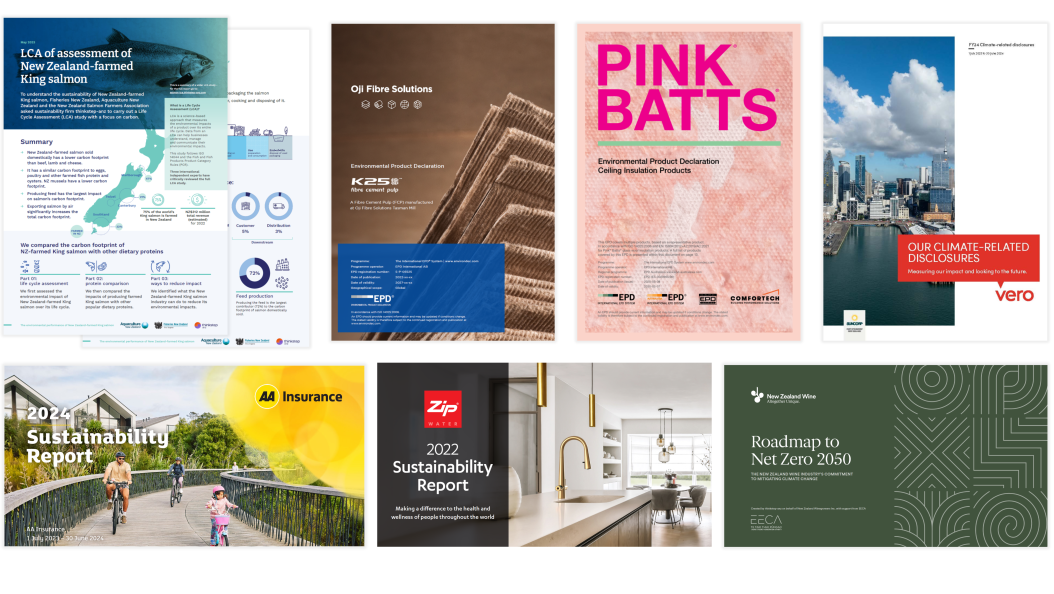
Examples of sustainability communications created by the Comms and Creative team at thinkstep-anz.
What is sustainability communication?
Sustainability communication is more than formal reporting or meeting regulations. It can take many forms: from conversations with customers to updates on social media, to the claims you make in packaging and tender documents. It shapes your brand and influences how people see your business. Whatever the channel, everything you communicate must be backed by evidence and reliable data.
Here are eight reasons why getting communication right matters
1. It drives better business performance
Good communication can give you a competitive edge. When you clearly explain your sustainability goals and progress, you demonstrate leadership and set your business apart from others in the market. For example, if you’re cutting emissions, explain how you’re doing it. At thinkstep-anz, we help organisations measure their carbon footprint. When you share this work publicly, you not only show progress, but you also build confidence in your brand.
2. It builds stakeholder support
You don’t work in isolation. Success depends on suppliers, partners, clients, investors, communities and your own team. Communicating your sustainability strategy in plain English helps others see why it matters and how they can contribute.
Take scope 3 emissions as an example. When we help organisations measure emissions across their supply chains, they can use the results to start conversations with suppliers and customers. This opens the door to collaboration and innovation.
3. It strengthens trust and reputation
Trust is hard won and easily lost. Transparent communication about sustainability builds credibility with your stakeholders. That means celebrating achievements but also being honest about challenges.
Customers and investors are alert to “greenwash”. Vague or exaggerated claims about environmental performance can quickly damage your reputation and can have legal consequences. Clear, evidence-based communication reassures your stakeholders that your claims can be trusted. By using data and evidence, like the results of a lifecycle assessment or an Environmental Product Declaration (EPD), you show stakeholders that your claims can be trusted.
4. It helps you manage risk
Sustainability reporting and communication aren’t just about good marketing. They’re also powerful tools for risk management. By gathering data, clarifying your strategy and reporting openly, you identify where your business is most exposed. This might be changing regulations, resource scarcity or shifting customer expectations.
For example, through materiality assessments, we help organisations identify the issues that matter most to their stakeholders. Communicating these clearly shows that you understand and are managing risks responsibly.
5. It motivates your people
Sustainability communication isn’t only for your external stakeholders. Your employees also want to know what you’re doing, why it matters and how they can contribute. When you share your goals clearly, you give your teams a sense of purpose and pride.
That might mean sharing milestones, such as achieving carbon neutrality or reducing waste in office operations. Regular updates show staff they are part of something bigger – and that their work matters.
6. It helps you avoid greenwashing and greenhushing
The best defence against greenwashing is accuracy. Use data, keep your language simple, and be honest about where you are on your journey.
At the same time, avoid “greenhushing”, staying silent because you’re worried about criticism. If you’re making real progress, share it. For instance, if you’re improving resource efficiency or designing products with circularity in mind, communicating your steps helps set higher standards in your sector
7. It clarifies your strategy and holds you accountable
Committing your sustainability strategy to paper makes it more coherent and actionable. Once it’s shared with your team and your stakeholders, it’s not just words on a page. You’ve made a commitment.
We work with organisations in developing strategies and roadmaps, and help them to communicate them clearly. Sharing your strategy means your suppliers, customers and investors know what to expect and can measure your progress. It also disciplines you internally: goals are more likely to be met when they are visible and shared.
8. It positions you as a leader in your sector
Manufacturers who communicate their sustainability work openly and consistently can shape the future of their industries. By aligning with recognised reporting frameworks such as GRI or Aotearoa New Zealand’s Climate Standards, you show you’re serious about leading the conversation.
This leadership can attract business opportunities, investors and good people. It also helps set expectations for your peers and partners.
Start simple, stay transparent, make an impact
Sustainability communication is not an add-on. It’s central to strategy, risk management, and brand.
Start by identifying the sustainability issues that matter most to your organisation. Set clear communication goals. Share your progress openly – in plain English, backed by evidence.
Good communication doesn’t just tell your story. It helps create the impact you’re aiming for: stronger organisations, healthier communities, and a more sustainable Aotearoa New Zealand and Australia.
This article is based on a guide we wrote with the Sustainable Business Council and Kaitiaki Collective. SBC’s guides support anyone driving sustainability in business, from sustainability specialists to people and culture teams, procurement leads and risk managers. Recent guides, grounded in te ao Māori, cover environmental, social and governance topics to help businesses make meaningful progress.