New Zealand's experience with mandatory climate-related disclosures (CRD) provides valuable lessons for Australian businesses as they prepare for similar requirements starting in 2025.
In 2021 New Zealand became the first country to pass a law that required mandatory reporting of climate-related risks and opportunities. Large financial institutions and NZX-listed entities are currently publishing their first mandatory climate statement for the 2023/24 year.
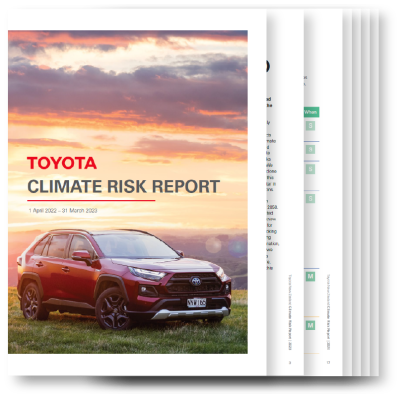
We supported some big companies, including Toyota New Zealand (read our case study here) in figuring out the information they needed to report with the standards and recommendations of the former Taskforce for Climate-related Financial Disclosures.
The reporting framework, on which New Zealand’s and Australia’s regulatory regimes are based, has four parts: governance, strategy, risk management, metrics and targets. Each part of the framework involves recommended disclosures.
Lessons learnt in New Zealand that Australian businesses can benefit from
Based on key learnings from our recent experience, here's a look at what organisations in Australia and New Zealand need to focus on in developing their climate-related disclosures.
1. Governance: building a strong foundation
Effective climate-related disclosures begin with robust governance. This means that the governance and management of climate-related risks must be explicit, detailed, and integrated into the organisation's overall structure. Key elements include involving the Board and Audit and Risk Committee (BARC), developing relevant Board skills, regular meeting frequencies, and clearly defined management responsibilities.
A strong governance structure ensures that climate-related risks are given the attention they deserve at the highest levels of the organisation. It also provides accountability for managing these risks, crucial for building stakeholder trust. Without this foundation, efforts in other areas of disclosure may falter.
2. Strategy: the importance of scenario analysis
When it comes to strategy, scenario analysis stands out as a critical, albeit challenging, component of climate-related disclosures. Scenario analysis involves exploring different potential futures based on various climate-related risks and opportunities, which can significantly impact a company’s business model, financial planning, and capital allocation.
However, scenario analysis is not a quick or easy task. It is complex, time-consuming, and requires substantial engagement and education within the organisation. The expectations are high: if done well, scenario analysis should lead to the disclosure of potential impacts on the business and facilitate effective transition planning. A well-crafted scenario analysis can guide companies in developing a resilient strategy that takes future climate-related challenges into account .
3. Risk management: integrating climate risks and opportunities
Risk management is another critical area where climate-related disclosures must be integrated. Disclosures need to satisfy the primary users- investors, regulators, and other stakeholders- that climate-related risks and opportunities are assessed just as rigorously as any other business risks.
This means that organisations must not only identify and assess climate-related risks and opportunities but also ensure that they are integrated into existing management systems. This integration is essential for providing a comprehensive view of how climate-related risks are being managed and how opportunities are to be realised.
4. Metrics and targets: setting the right goals
Finally, the effectiveness of climate-related disclosures hinges on the quality of the metrics and targets set by the organisation. The initial focus for many organisations is on creating a complete greenhouse gas (GHG) emissions inventory that covers all scopes (1, 2, and 3). However, this is often easier said than done, particularly for Scope 3 emissions, which many organisations find challenging to measure and manage.
In New Zealand, for instance, many organisations struggled with developing comprehensive Scope 3 emissions. Setting science-based or aligned targets presents another layer of difficulty, as these targets often involve stringent reduction requirements that demand significant organisational change.
Yet, despite these challenges, setting clear, ambitious metrics and targets is crucial. These provide a benchmark against which the organisation’s progress can be measured and signal to stakeholders that the organisation is serious about addressing climate-related risks and opportunities.
Moving forward with confidence
Navigating the complexities of climate-related disclosures is no easy task, but it is a necessary one. By focusing on strong governance, thorough scenario analysis, integrated risk management, and clear metrics and targets, organisations can create disclosures that not only meet regulatory requirements but also build trust with stakeholders and contribute to long-term success.
As the pressure for transparency continues to mount, organisations that invest in robust climate-related disclosures will be better positioned to manage the risks and seize the opportunities presented by the changing climate. In doing so, they will not only protect their own futures but also contribute to a more sustainable world.