How did you get started in sustainability and Life Cycle Assessment (LCA)?
My Master of Engineering degree focused on product life cycle management. Working in engineering was interesting, but I felt I could contribute more. I wanted to have a long-term impact, and started thinking about how engineering, sustainability and economics relate to one other.
While I was working on valve design for an oil and gas company, I saw that engineering has a much bigger potential to contribute and I started to explore on how I can make more out of my education background.
Copper’s played a big part in your sustainability career. Tell us more.
 While I was studying, I produced an LCA for the CSIRO (Commonwealth Scientific and Industrial Research Organisation in Australia), looking at five major copper mines. I analysed 70 years of production data and future scenarios and published a well-received paper: ‘Life cycle assessment: a time-series analysis of copper’.
We showed how Australia’s mineral resources are changing and contributed to identifying peak production and the ‘stop digging’ point. This research showed that we can’t continue mining at this pace forever – even with improved technologies for mining, smelting, and crushing materials. The environmental impact increases exponentially.
These results were eye-opening – and motivating. A systems approach based on LCA can guide policy decisions around using resources and the resource supply chain. I wanted to do more!
Why do you enjoy LCA work?
LCA makes a difference. Plus, I like doing the LCA calculations, linking them to policy, and showing how we need to look at all impacts together – on the economy, society, and the environment – to make decisions.
Do you feel that LCA is being valued more?
Yes, the uptake’s increasing, in Australia, New Zealand and Europe too. Businesses are following regulations and the market is valuing sustainable products. Together, these result in more interest from businesses to do LCA for their products and services. LCA’s adding market value for businesses now.
Coming from the academic world, what appeals about working with thinkstep-anz?
My work at thinkstep-anz connects me with industries and businesses directly, including small companies. I get to use LCA to help business in transition to sustainable practices – and profitably. And I work on a variety of projects.
I enjoy the diversity of the team at thinkstep-anz. I feel part of a family rather than a company.
How important is communication to getting messages across to industry?
Very important. Calculating an industry’s environmental footprint affects businesses. So, it’s important to help people in the industry understand how they can reduce their impacts, plus the benefits of communicating their impact openly.
It’s not always easy to reach people – but it’s vital. I’ve communicated my work through industry workshops. And I’ve contacted environmental managers directly, too, to explain the research and ask for their questions and comments.
What does sustainability mean to you?
It’s about creating harmony between humans and nature. We need to use the environment, but in the right way – developing without damaging. We’ve been living for many years without considering sustainability. It’s time to look back and modify our approach.
Where should we focus our sustainability efforts?
We can start with simple things. For example, by being less materialistic and finding sustainable ways to experience things like travelling.
How does your background influence your work?
I was born in a small town in Iran. My family harvested vegetables in our garden and much of our food was produced locally. Growing up, I would go bushwalking with my family and I made a strong connection with nature. Looking back now, I realise that a lot of the things we did were sustainable and healthy. At the time I didn’t understand sustainability, but my upbringing helped me build a good connection with it.
Later, while I was working in different countries, I understood that human peace and happiness are about using the resources around you sustainably. I’ve lived in resource scarce countries such as Singapore where people live differently by making the most out of the resources they have.
What are the most sustainable and unsustainable things you’ve done recently?
The most sustainable thing is joining thinkstep-anz! And starting a small garden.
The most unsustainable? I like driving and that’s not a very sustainable transport practice.
How do you recharge between sustainability projects?
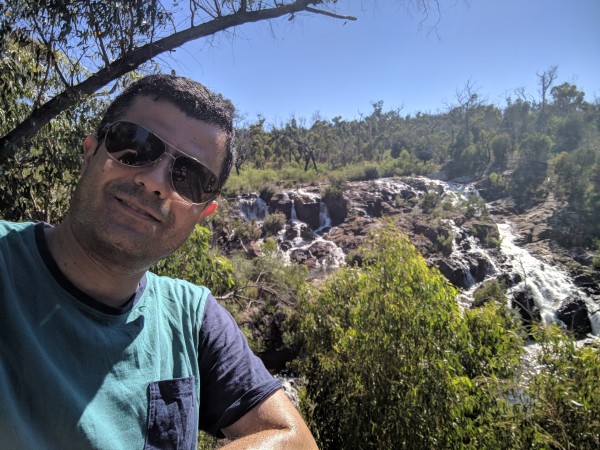
I love getting out into nature – hiking, snorkelling, bird watching. I like cooking, including Persian food and Asian food. And I enjoy travelling.