Florian is thinkstep-anz’s resident B Keeper. He manages our B Corp certification and helps guide others in theirs. To celebrate B Corp month, we sat down with him to learn about the vibrant business ecosystem that is the B Corp community, and his pathway into sustainability.
Your background is in economics. How did you make the transition to sustainability?
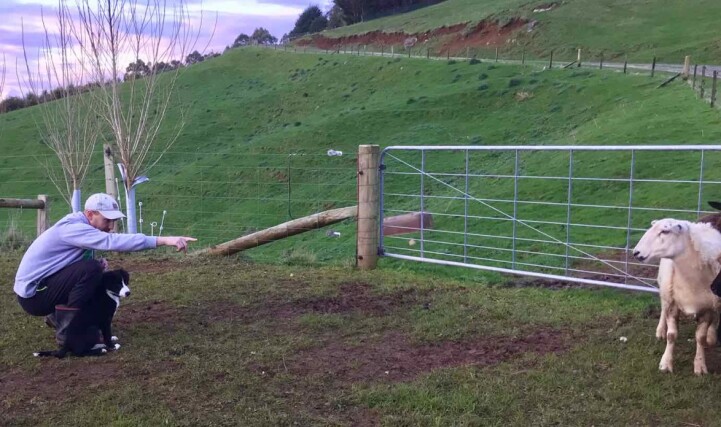
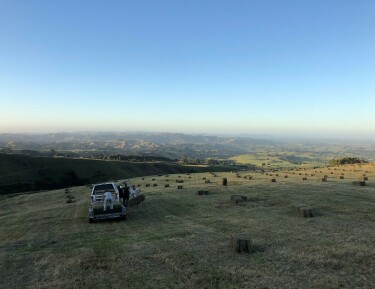
I started out in commercial and agri banking at ANZ. At the time, you heard a lot about the impacts of agriculture, and it got me thinking more broadly about sustainability. I grew up on a farm and there are multiple ways of doing one thing, but some are exceedingly better than others. I realised that whatever we do in life, we need to be mindful of environmental impacts. After a stint in Canada, I joined thinkstep-anz. I’ve been here ever since!
Did you see links between your work at the bank and working at thinkstep-anz?
I had that background in the business value of things. At the bank it was always about a business proposition – if I invest in this particular thing, what can I expect my return to be? At thinkstep-anz that means having a yarn to people about what sustainability means to them. I’m always thinking ‘what's in it for them?’
You took a more pragmatic approach?
There’s a laundry list of things that would be nice to do in an ideal world. Sometimes business realities prevent those things from being feasible. Again, it’s about the greater value: customers are asking for it; or there’s the wider international context.
Sustainability initiatives may appear costly at first. But, for example, if the EU puts rules in place, like tariffs on agricultural products because of their impacts, you can’t ignore it. We shouldn’t consider these things in isolation. We need to look at the broader economic context.
What were your first impressions of B Corp?
It’s a broad approach to doing the right thing in terms of the services you provide, your governance structure, environmental footprint. It’s a holistic look at a system that includes society and environment. It really reflects what we’re trying to achieve at thinkstep-anz.
Tell me about thinkstep-anz’s pathway to B Corp certification.
At first, we weren't eligible because our company structure was changing. In the meantime, there was a B Corp event in Australia and they let us attend. We got to mingle with like-minded companies: law firms, eyewear companies, accountants, Patagonia was there. It was a total spread of companies, and they all wanted to go beyond business as usual and be part of something bigger. It was just a great place to be.
That really set us off. We knew this was something we had to be a part of! In 2018 we became eligible for certification. We went through the B Impact Assessment and later became B Corp-certified. We haven't looked back. In that time, it's become a renowned certification in Australia and New Zealand.
B Corp is about making business a force for good. How do you see that happening on the ground?
Well, there are businesses out there who already do a lot of good. The owner, the CEO, management, just feel it’s the right thing to do. But often there aren’t formal processes to ensure the legacy continues. Being a B Corp is partly about formalising that approach, which means that it stays around for longer than the personal interests of one particular person at their company.
Now, B Corps in Australia and New Zealand require a legal amendment to their company constitution. There’s a clause explicitly outlining that the purpose of the company can be to deliver returns to shareholders, but also to have a positive impact on society and the environment. As B Corp becomes more mainstream, they've taken the requirements up a notch. It helps those companies who want to implement new initiatives but need encouragement. Then there’s the scoring system which allows you to benchmark against your peers. All these factors flow into promoting better corporate behaviour.
You've recently become a B consultant. What does that entail?
Being a B consultant is about understanding the mechanics of the assessment. Besides the common themes, the assessment varies depending on what sector you're in, the size of your organisation, and so on. As a B Consultant you have to know where the pain points are for companies and how to get them to the 80-point threshold for certification.
What’s a common experience for companies doing the assessment?
It's tough! A lot of people think ’the assessment looks like a lot of work, but if I go through it and fill it out, then I'm probably going to get there’. But that’s not the case. Most organisations have to make changes or implement policies to meet the requirements. That’s actually part the appeal of the assessment. If this was just a box-ticking exercise it wouldn’t be so significant. The rigour is a feature of the process, not a bug.
Do you think impact-driven companies will become the norm in New Zealand and Australia?
Yes. But not necessarily all for altruistic reasons. Consumers want products that they can feel good about. There’s more consideration about how things are made. B Corp is a good indication that the company’s values or operations are beneficial to society and the environment.
Increasingly, consumers want the companies they buy from to reflect their values. We're voting with our wallets here. Social media and the internet have helped.
Before, it was hard to find that information about a company. Now, if you can't find in formation, people automatically assume the worst. We're in an age of transparency. I think that's one of the big reasons B Corp has exploded too.
How does sustainability influence your day-to-day?
Well, it influences how I drive, what I eat, what I buy. I’ve got a little farm so I think about how many animals I can put on it. You know that saying ‘you can't manage what you don't measure’? To me sustainability is being conscious that our actions have consequences. I think the vast majority of people want to make the right decisions. But they don't always have the necessary information.
Where will we find you when you're not tending the farm?
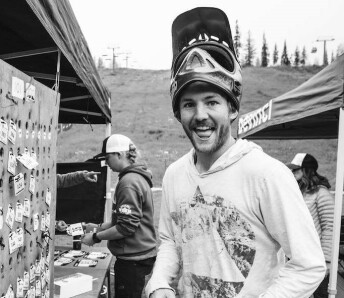
The mountains! I love skiing and mountain biking. But it’s become a joke with my mates that I tend my farm all the time now. I enjoy the weirdest things like spraying gorse and building fences. Generally mundane stuff but when it's your own it changes your perspective on things.